



A Beginner’s Guide to Understanding Indonesia’s Stock Index

Jakarta. For many people, the stock market seems like a complicated world filled with constantly moving numbers and unfamiliar technical terms. Yet behind the daily price fluctuations lies one essential tool that helps investors understand the market’s direction more simply --the stock index.
A stock index is like a large mirror reflecting how stocks in a particular exchange are performing, whether they are growing, stagnating, or declining.
In Indonesia, the Jakarta Composite Index (IHSG or JCI) serves as the main benchmark representing all stock movements on the Indonesia Stock Exchange (IDX). The IHSG includes hundreds of stocks across various sectors, from banking and energy to technology, consumer goods, and more. When the IHSG rises, it indicates that, on average, stock prices are increasing. Conversely, when it falls, it shows that market sentiment is weakening. Because of its broad coverage, the IHSG is often called the “thermometer of Indonesia’s economy” --a gauge of how warm or cold investor confidence is toward the nation’s economic outlook.
Beyond the IHSG, there are other, more specific indices. The LQ45 Index, for example, consists of 45 of the most liquid and largest-cap stocks, often used as a reference by institutional investors. The IDX30 Index is a more compact version focusing on blue-chip stocks with high trading volume and strong fundamentals. For those who prefer to invest according to Islamic principles, there are indices such as the Jakarta Islamic Index (JII), the Indonesia Sharia Stock Index (ISSI), and other Sharia-compliant indices that list only companies meeting Islamic finance standards. There are also thematic indices, such as the IDX ESG Leaders, which feature companies committed to sustainability, and the IDX Growth30, highlighting firms with high growth potential.
The main purpose of these indices is to provide a comprehensive picture of the performance of certain groups of stocks. For instance, if the LQ45 Index rises while the IHSG falls, it may indicate that large-cap stocks remain strong while others face pressure. Understanding this helps investors track where major funds are flowing and assess the risks and opportunities in the market.
However, understanding stock indices goes beyond reading numbers. Behind every index movement lies a mix of economic, political, and even psychological factors. When the economy grows, consumer spending rises, and corporate profits improve, indices tend to strengthen. On the other hand, global issues such as US interest rate hikes, wars, or geopolitical tensions can lead to corrections. Thus, learning about stock indices also means learning to interpret the interaction between economic data, geopolitics, and market sentiment.
For beginner investors, stock indices can serve as a valuable guide for making investment decisions. By monitoring the IHSG and sectoral indices, investors can determine whether the market is currently in an upward (bullish), downward (bearish), or sideways trend. Indices also serve as benchmarks for investment products such as index mutual funds and Exchange-Traded Funds (ETFs), which replicate an index’s movement. Through these instruments, investors can invest passively without selecting individual stocks while still participating in the market’s overall growth.
Stock indices also help investors monitor foreign capital flows. Global investors typically don’t analyze every listed company individually; instead, they observe index movements as indicators. When the IHSG remains stable and shows an upward trend, it signals growing foreign confidence in Indonesia’s market, leading to capital inflows. Conversely, during times of global uncertainty, capital outflows may occur, putting pressure on the index. Therefore, index stability is often seen as a reflection of both economic resilience and global trust in Indonesia.
The COVID-19 pandemic provides a vivid example of how stock indices mirror economic dynamics. In early 2020, the IHSG plunged more than 30% amid global panic. However, as the economy recovered, vaccination programs advanced, and fiscal policies provided support, the index gradually rebounded. From that experience, investors learned that a stock index is more than just a fluctuating number, it reflects the economy’s resilience and society’s confidence in the future.
In the global context, the IHSG’s movement cannot be separated from the dynamics of major international indices such as the Dow Jones Industrial Average, Nasdaq, Nikkei 225, and the MSCI Emerging Markets Index. Today’s stock markets are deeply interconnected, when Wall Street weakens, the impact can be felt across Asia, including Indonesia. Hence, for local investors, understanding stock indices also means understanding the relationships among global markets.
Ultimately, learning about stock indices is not just about technical analysis or numbers; it’s about understanding the story behind the capital market: a story of growth, optimism, and confidence. Stock indices teach us to see the bigger picture, to avoid getting trapped in short-term euphoria, and to understand that market movements are driven by complex human sentiments.
For beginner investors, knowing the stock index is the first step toward greater financial literacy. For the nation, maintaining a stable and growing index is part of preserving public optimism about Indonesia’s economic future.
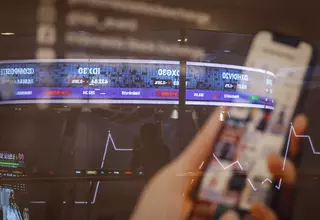
So, when you see the IHSG moving across a financial news screen, don’t just read the number. See it as a great mirror reflecting the journey of Indonesia’s economy --rising, correcting, and rising again. A reflection that reminds us that the market, like life itself, is always dynamic. Behind every movement lies a valuable lesson for those who choose to understand.
Tags: Keywords: as a preferred
Related Articles
MSCI Concerns, Tighter IDX Trading Rules Send Indonesian Stocks Down 5% by Midday
Indonesian stocks plunge 5% by midday as MSCI concerns weigh on sentiment and the IDX tightens its daily downside limit to 7%.
Indonesian Bank Stocks Hit Pandemic-Era Valuations After MSCI Shock
Indonesian bank stocks hit crisis-era lows as MSCI's downgrade proposal sparks a selloff and fuels fears of foreign outflows.
Black Week for Indonesia Stocks Exchange as Market Loses $85 Billion
Indonesia’s stocks plunged 14.91% in a week, wiping out $94 billion in market value as MSCI weighs a downgrade to standalone status.
Indonesia Fines DSSA, BREN and CUAN Rp 2.1 Trillion for Market Violations
OJK fines DSSA, BREN and CUAN Rp 2.1 trillion over stock manipulation and alleged irregularities in share offerings.
MSCI Warning Raises Existential Questions for Indonesia's Stock Market, Economist Says
MSCI's downgrade threat tests Indonesia's market credibility, with an economist urging reforms to restore investor trust.
Explainer: What Is MSCI Market Classification and Why Does It Matter for Indonesia?
MSCI classifies stock markets as developed, emerging, frontier or standalone. Here’s how the system works and why Indonesia’s status matters
MSCI Mulls Downgrading Indonesia to Standalone Market
MSCI is now weighing launching a consultation on the standalone market downgrade unless Jakarta shows meaningful progress by November.
OJK Flags 19 Stocks for High Ownership Concentration
OJK flags 19 stocks for high ownership concentration and will step up scrutiny of actively traded shares over manipulation risks.
Indonesia Braces for MSCI Review in November
MSCI has given Indonesia time until November, warning that it could downgrade Jakarta’s status to frontier markets.
Jakarta Stocks Rise 1.21% as Indonesia Lags in AI Boom
Indonesia’s stocks gained 1.21% as the World Bank said the country is lagging Malaysia and Vietnam in benefiting from the AI boom.The Latest

Jakarta Outranks Amsterdam in Global Public Transport Survey
Jakarta climbs two places to 15th in Time Out's 2026 public transport survey, with its governor citing better network integration.
MSCI Concerns, Tighter IDX Trading Rules Send Indonesian Stocks Down 5% by Midday
Indonesian stocks plunge 5% by midday as MSCI concerns weigh on sentiment and the IDX tightens its daily downside limit to 7%.
Jakarta Prepares 367 Health Facilities as Haze Reaches the Capital
Jakarta prepares 367 health facilities to treat potential haze-related illnesses after smoke from Sumatra and Kalimantan crosses the region.
Jakarta Expands Flood Prevention With New Water Storage Ponds
Jakarta opens two East Jakarta water storage ponds as it expands flood prevention efforts through reservoirs and river normalization.
Press Council Highlights AI Ethics at United Tractors Journalist Workshop
United Tractors’ 2026 journalist workshop highlights ethical AI use and the importance of trust and credibility in journalism.Most Popular
