



Trump’s Tariffs Hit Hard: Americans Pay the Price
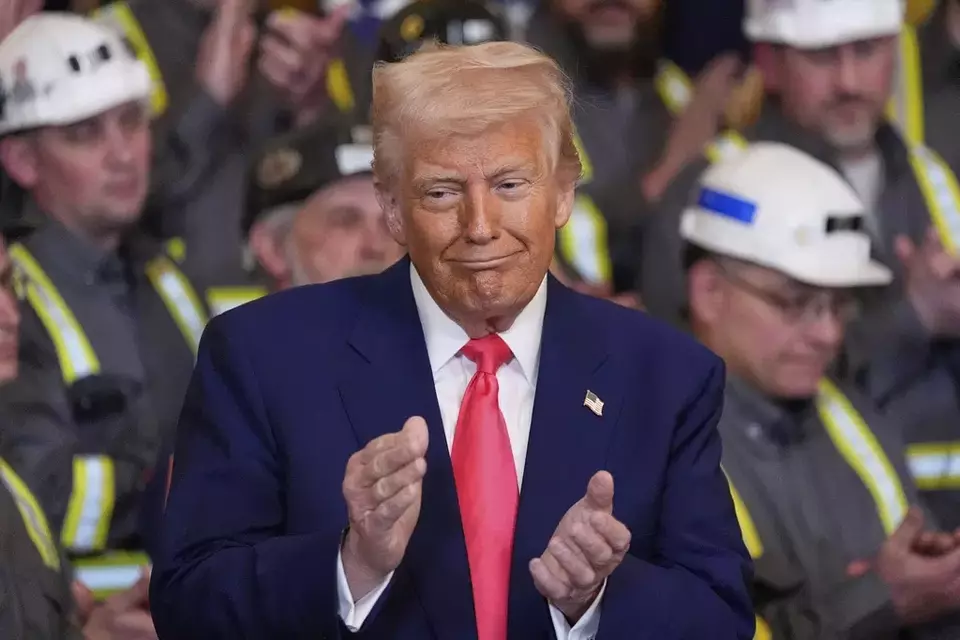
When Trump revived and vastly expanded his tariff agenda on April 2, 2025 -- raising duties on imports from 185 countries -- he claimed to be defending American jobs and correcting trade imbalances. Yet the evidence is clear: these tariffs function as a tax on US businesses and households, with nearly the entire cost passed on to buyers, while exporters absorb little to none of the burden.
The damage from Trump’s tariffs goes beyond higher prices; the impact runs deeper and is likely to push the US economy further toward recession. As of April 12, Trump maintained a 145 percent tariff on Chinese imports -- prompting China to retaliate with a 125 percent tariff on US goods -- while placing proposed tariff increases on 75 other countries on hold.
Tariffs function as a tax on US businesses and consumers. Contrary to Trump’s claims, they are not paid by foreign exporters but by American importers and passed on at higher prices to American customers. Most, if not all, American manufacturers rely on intermediate goods --components and raw materials -- from abroad. When tariffs raise the cost of these inputs, the final products become more expensive and less competitive.
East Asia -- often accused by Trump of 'stealing' American jobs -- has, in fact, played a pivotal role in strengthening the US economy by helping the development of American strategic industries. In 2024, the United States engaged in extensive trade with East Asian partners: China ($476.8 billion), Japan ($144.8 billion), South Korea ($197.1 billion), and Southeast Asian countries -- grouped as a regional bloc so-called ASEAN -- with total trade reaching $412 billion. East Asia's contribution to the development of the US industries encompasses vital sectors such as electronics, automotive components, machinery, and advanced technologies.
These trade relationships provide US industries with essential inputs, enhancing competitiveness and offering consumers a wide range of products. Rather than displacing American workers, they bolster US production by providing access to high-quality raw materials, components at competitive prices, and advanced technologies. American automakers, for instance, rely on Korean EV batteries and Japanese electronics to build cars in Michigan and Ohio. Chinese rare earths and steel -- as well as machinery and electronics components and semiconductors from ASEAN -- support the United States’ cutting-edge technology industries.
Beyond trade, East Asian nations have made significant investments in the US economy. Japan, for example, is the largest foreign direct investor in the United States, with over $783 billion in FDI, while South Korea ranks tenth with $128 billion.
East Asian countries are also major holders of US Treasury securities, reflecting deep financial interconnections. As of mid-2024, Japan held approximately $1.06 trillion, China $759 billion, and South Korea $112 billion in US Treasury securities. ASEAN countries collectively hold around $320 billion in US Treasury securities. Together, East Asia accounts for over half of all foreign-held US debt, amounting to approximately $2.7 trillion, or around 14 percent of total US government debt -- demonstrating not only their economic weight but their indispensable role in sustaining American fiscal and industrial strength.
Trump’s tariffs are politically designed as a means to punish targeted countries and are simultaneously promoted as a strategy to “Make America Great Again.” But in practice, they hurt middle- and working-class households the most. Higher prices on imported goods -- from food and fuel to electronics and clothing -- function as a regressive tax, disproportionately burdening lower-income Americans.
A study by Amiti, Redding, and Weinstein (2020) claims that tariffs introduced under Trump's first administration reduced US total output (GDP) by 0.5 percent and cut real household income by about $675 per year. These losses disproportionately affect families already struggling with inflation and stagnant wages. In addition, according to the Federal Reserve (2019), Trump’s initial tariff hikes in 2018 led to a 1.4 percent decline in US manufacturing employment. The US steel and auto sectors, for example, have experienced increased production costs without significant long-term job gains.
The impact of Trump’s tariffs on the US economy extends beyond higher prices and potential layoffs; financial markets have also responded sharply. Following Trump’s April 2025 announcement of a 145 percent tariff on Chinese imports, the S&P 500 fell by 4.5 percent, the Nasdaq by 5.25 percent, and the Dow Jones by 3.67 percent. These market fluctuations underscore the significant influence of trade policy announcements on financial markets, reflecting investor sensitivity to geopolitical developments. Rising uncertainty has led firms to cancel or delay investments. A chilling effect on capital expenditures is already evident, as businesses weigh the risks of a more protectionist future.

To those who continue to support Trump’s unjustified tariffs, this is not a rebuke -- it is a reality check. The evidence is mounting: rising prices of raw materials and intermediate goods, shaken financial markets, declining business confidence, and a growing risk of recession. Clinging to protectionist myths in the face of economic facts will not shield American households from the consequences.
On April 12, the Federal Reserve cautioned that the tariffs could push inflation to 4 percent. Simultaneously, country risk premiums on US assets have risen, the dollar has fallen to its lowest level in three years, and a market sell-off has put Treasuries on track for their worst week since 2019. And this may be just the beginning.
Tariffs cannot resolve America’s deeper economic challenges -- mounting public debt, widening fiscal deficits, crumbling infrastructure, and persistent inequality. Addressing these issues requires more than protectionist rhetoric; it requires peace, a stable global economy, forward-looking domestic reforms, and strong international cooperation rooted in mutual respect.
Tariffs are not a path to greatness. They are a tax on American prosperity. Before it’s a little bit too late, it’s time for the US to choose a smart policy over soundbites -- because in today’s connected world, no country can thrive alone. The economic burden of tariffs will not be paid by China, Japan, Vietnam, or other countries targeted by Trump. It will be paid in Wyoming, West Virginia, Oklahoma, and every other state. It will be paid by American businesses facing higher costs, by workers facing layoffs, and by families struggling to make ends meet. It will be paid by the very American workers and families these policies claim to protect.
---
Lili Yan Ing is the Secretary General of the International Economic Association (IEA). The views expressed in this article are those of the author.
 as a preferred
Related Articles

Canada to Unveil Response to Trump's Steep Tariffs
In an earlier phase of the dispute, Ontario imposed a temporary 25% surcharge on electricity exports to three US states.The Latest

Chandra Asri Group Receives Trade Finance Excellence Award, Reinforcing Its Role in Indonesia’s Industrial Development
Chandra Asri Group receives the Trade Finance Excellence Award at CIMB Niaga Business Summit 2026.
AEON MALL Deltamas Brings 11 Sports and Creative Competitions to AEONLYMPIC 2026
AEON MALL Deltamas hosts AEONLYMPIC 2026, featuring 11 sports and creative competitions, with more than 3,100 participants.
Indonesian Stocks Extend Losses for Third Day, Fall 3.64% to 4,996
Indonesian stocks fell 3.64% on Monday, extending losses for a third straight session amid MSCI concerns and tighter trading limits.
Prabowo Calls Meeting on Forest Fires as Haze Reaches Jakarta, Singapore
Prabowo summons senior officials to discuss forest fires as smoke reaches Jakarta and Malaysia pushes for regional action.
Jakarta Outranks Amsterdam in Global Public Transport Survey
Jakarta climbs two places to 15th in Time Out's 2026 public transport survey, with its governor citing better network integration.Most Popular
