



Thailand-Cambodia Ceasefire and ASEAN’s Structural Limits
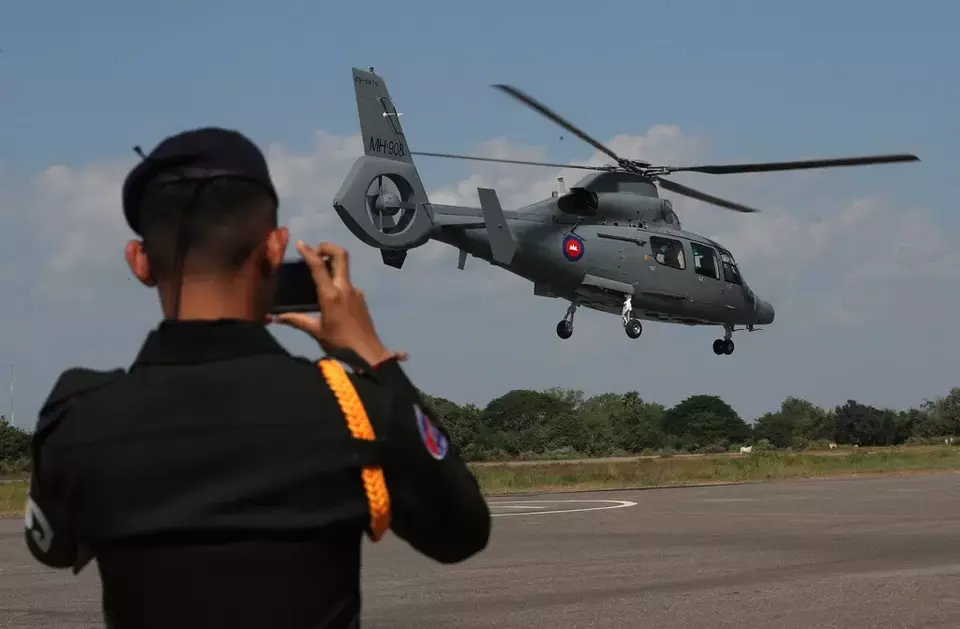
Renewed fighting along the Thailand-Cambodia border in early December 2025 has once again exposed the fragility of peace in mainland Southeast Asia. What initially appeared to be a contained border dispute quickly escalated into artillery exchanges, air strikes, and large-scale troop movements, underscoring the persistence of unresolved territorial tensions in the region.
This latest confrontation is not a marginal incident. It is among the most intense episodes of violence since a five-day battle in July, and its rapid escalation underscores two interlinked realities. First, the deeply entrenched nature of territorial disputes in Southeast Asia. Second, the continuing limitations of regional mechanisms intended to manage such conflicts. At its core, this is a test of ASEAN’s commitment to peaceful dispute resolution, mutual trust, and collective responsibility.
The roots of the conflict stretch back to the legacy of colonial border demarcations and the rulings of international judicial bodies. The International Court of Justice’s 1962 decision awarding sovereignty over the Preah Vihear Temple area to Cambodia provided legal clarity in one dimension of the dispute, yet it did not resolve competing claims in adjacent territory. Areas around temples such as Ta Muen Thom and Ta Krabey remain contested, and their symbolic significance has repeatedly inflamed nationalist sentiment on both sides of the border.

The outbreak of hostilities followed the breakdown of a tenuous ceasefire brokered by external actors. An agreement agreed in October under the auspices of the United States and Malaysia was initially hailed as a diplomatic breakthrough, but quickly unravelled amid mutual accusations of violations. Thailand subsequently suspended the arrangement after a landmine explosion wounded its soldiers, an incident Bangkok attributed to Cambodia, an allegation Phnom Penh denies, before launching air strikes against Cambodian positions.
The human cost of the renewed clashes was immediate and palpable. Cambodian authorities have reported civilian deaths, while Thailand has acknowledged the first civilian fatalities within its own territory since the escalation. According to regional reporting, more than half a million civilians were displaced on both sides of the border, echoing the humanitarian fallout witnessed during the July fighting.
Since then, however, diplomatic momentum has shifted. A new ceasefire has been reached, with Malaysia, acting in its capacity as ASEAN Chair, playing a more visible and assertive role in facilitating dialogue between Bangkok and Phnom Penh. Kuala Lumpur’s active shuttle diplomacy and coordination with other ASEAN members helped stabilize the situation and prevent further escalation, at least for now.
This diplomatic breakthrough is important and deserves recognition. It shows that ASEAN can still play a constructive role when leadership is decisive and political capital is fully deployed. However, the fact that de-escalation depended so heavily on the initiative of the ASEAN Chair also exposes a deeper problem. The ceasefire reflects crisis management driven by leadership rather than by institutional capacity, offering a pause in violence but leaving the underlying dispute fundamentally unresolved.
And it is here that the broader political implications emerge. Beyond bilateral border security, the crisis raises enduring questions about ASEAN’s coherence as a regional security framework. My core argument is that ASEAN, in its current institutional form, remains structurally ill-equipped to resolve militarized disputes between its own members. The organization’s foundational principles, particularly non-intervention and consensus-based decision-making, continue to constrain its ability to act decisively when conflicts are driven by domestic political incentives.
This diagnosis does not render ASEAN irrelevant. On the contrary, Malaysia’s recent diplomatic role illustrates ASEAN’s potential when political leadership aligns with regional responsibility. However, such effectiveness remains contingent on individual chairs rather than embedded institutional capacity. Without stronger conflict-monitoring mechanisms, clearer enforcement tools, or a recalibration of how non-intervention is applied in situations involving armed violence and humanitarian risk, ASEAN’s responses are likely to remain ad hoc and reactive.

Past mediation efforts have often faltered not because ASEAN lacked goodwill, but because it lacked the authority and instruments to ensure compliance. Even when observer missions or joint statements are deployed, there are few mechanisms to monitor violations or impose consequences. The recent ceasefire, while welcome, remains vulnerable to the same structural weaknesses that undermined earlier agreements.
Moreover, the fragility of ASEAN’s consensus model was evident in the early stages of the crisis. Despite statements urging restraint, sustained high-level engagement at the bloc level only materialized once violence had already escalated. This pattern risks reinforcing perceptions that ASEAN is better at managing optics than preventing conflict.
The implications extend beyond the Thailand-Cambodia border. A prolonged cycle of escalation and de-escalation could encourage further militarization, erode trust among member states, and weaken intra-regional cooperation. At a time when major powers are competing for influence in Southeast Asia, ASEAN’s capacity to manage crises among its own members will shape not only its credibility but also the region’s strategic autonomy.
The renewed Thailand-Cambodia clashes ultimately offer more than a reminder of unresolved border disputes. They reveal the structural limits of ASEAN as a regional security actor. Malaysia’s active role in brokering the ceasefire demonstrates what is possible when leadership is assertive and diplomacy sustained. Yet it also underscores a persistent reality: ASEAN’s capacity to manage conflict remains dependent on individual initiative rather than institutional strength. Unless these structural constraints are addressed, future intraregional crises may continue to be contained, but not resolved.
---
Najamuddin Khairur Rijal is a lecturer in the International Relations Department of Muhammadiyah University in Malang, East Java.
The views expressed in this article arethose of the author.
Tags: Keywords: as a preferred
Related Articles

IMF Upgrades Indonesia’s 2026 Growth Forecast to 5.1%
Indonesia has yet to beat Vietnam as the fastest-growing ASEAN economy.
ASEAN Digital Pact to Drive Cross-Border Payments
ASEAN is set to sign its digital economy pact, which Standard Chartered believes will change how the members do business with each other.
Indonesia Races with ASEAN Neighbors for Investments
Indonesia and its ASEAN neighbors are pursuing aggressive reforms to attract foreign investors, according to Investment Minister Rosan.
ADB to Inject Another $3 Billion to ASEAN Tourism
Between 2015 and 2025, ADB has deployed over $3.7 billion to turn ASEAN into better tourist magnets.
‘ASEAN Members Don’t Always Agree, But We Stay Together’: Indonesia
Indonesia says ASEAN members “choose to keep talking, even when agreement is difficult”.
Indonesia Wants to Link QR Payment with Timor-Leste
In ASEAN, Indonesia's QRIS payment system is already available in Singapore, Thailand, and Malaysia.
Hong Kong Investors Gain Equal Treatment in New ASEAN Deal
ASEAN has promised not to treat Hong Kong investors differently under a freshly inked deal.
Indonesia Says Still No Protests from ASEAN Neighbors over Haze
Indonesia maintains "good relations" with its ASEAN neighbors on tackling the transboundary haze, according to the Foreign Ministry.
Vietnam’s $80 Billion EU Trade Shows Indonesia’s Untapped Potential: Ambassador
Indonesia-EU trade remains below its potential, with the bloc's ambassador pointing to Vietnam's $80 billion trade benchmark.
ASEAN Has a Haze Agreement But Regional Action Is Still Limited
ASEAN mechanism might be a realistic way to combat the region’s haze, although it comes with limitations, according to experts.The Latest

Ferry Burns for Hours Near Merak After Passengers and Crew Escape
The Batumandi ferry fire is the latest in a series of serious passenger vessel accidents reported in Indonesia over the past five months.
Indonesia Attracts $2.5 Billion Palm Oil Investment So Far in 2026
In Q3 alone, Indonesia saw Rp 14.9 trillion ($829 million) worth of investments coming to its value-added palm oil processing.
Minimum Wage Hikes Fail to Keep Up With Rising Living Costs
Indonesia’s 2026 minimum wage hikes offer limited relief as rising prices erode purchasing power and job insecurity persists.
Prabowo Government Gets Poor Ratings from 66% of Surveyed Professionals
According to the findings, 66% of respondents rated the government's overall performance as poor or very poor.
Rupiah Strengthens to Rp 17,992 as Investment Data Lifts Sentiment
Rupiah gains 0.30% to Rp 17,992 per dollar as strong investment realization and easing US-Russia tensions lift market sentiment.Most Popular
