



Global and Indonesia’s Trade Prospect in the 2nd Half of 2024
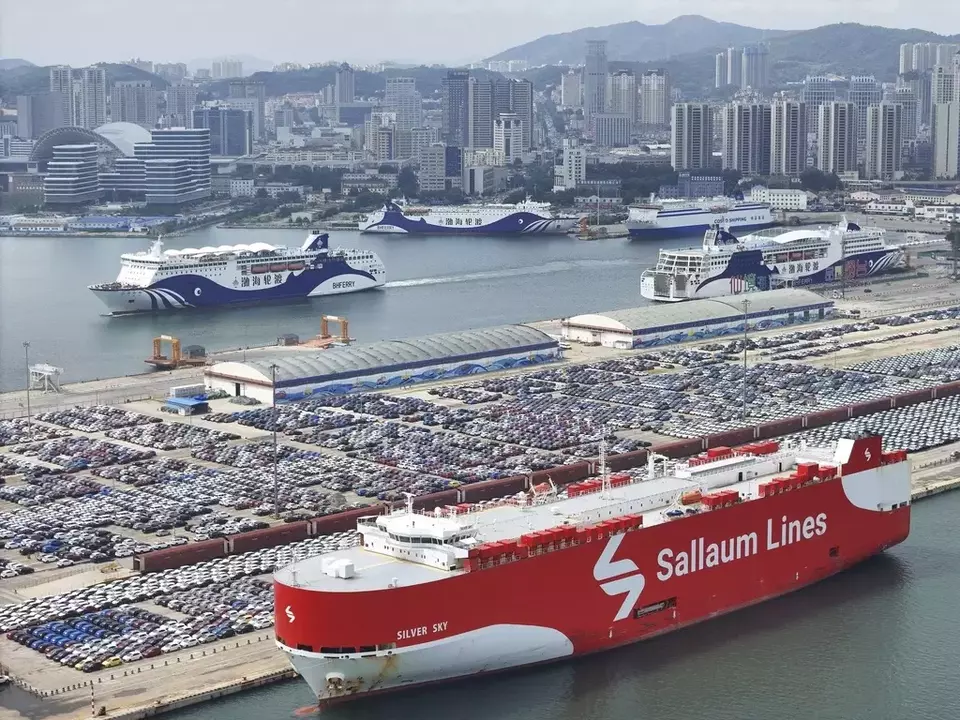
Surveys conducted by research institutes, economic think tanks, and academia generally show that the world enters the second half of the year with a higher degree of optimism than seven months ago. However, continued geopolitical tensions, potential military conflicts in the Middle East, and the Federal Reserve's benchmark federal funds rate -- remaining at a 23-year high of between 5.25 percent and 5.5 percent -- may adversely affect trends in global trade in the latter half of 2024.
As of mid-2024, global trade has shown signs of recovery and growth, with significant contributions from emerging markets and specific sectors. In the first quarter of 2024, global trade in goods increased by around 1 percent, while trade in services grew by approximately 1.5 percent. This growth has been primarily fueled by positive trade dynamics in the United States and developing countries, particularly in sectors related to green energy and artificial intelligence.
China, India, and the US have seen notable increases in their exports, contributing to this positive trend. However, Europe's exports remained stagnant, and Africa experienced a decline in exports. Overall, if these positive trends continue, global trade in 2024 could reach nearly $32 trillion, though it is unlikely to surpass the record levels seen in 2022.
Emerging markets have been playing an increasingly significant role in global trade. Countries such as China now account for a substantial share of global exports, driven by their competitive advantages in low-cost production and accommodative government policies. This shift has resulted in a higher proportion of unfinished goods, components, and services in global trade, which now make up 70 percent of all trade.
Despite these positive trends, challenges remain, particularly in the trade of services. Services trade, which accounts for two-thirds of global GDP, has faced significant disruptions due to geopolitical tensions and protectionist policies. Political manipulation and non-tariff barriers continue to pose risks to the free flow of services across borders.
While the short-term outlook for global trade in 2024 is cautiously optimistic, various economic, political, and environmental forces will continue to influence and reshape the global trade landscape. One such force is the ebb and flow of global stock markets.
Panic in these markets can easily drag down global growth, and such panic may be caused by perceptions or sentiments of stock traders, not necessarily based entirely on objective calculations.
A recent example occurred on August 5, 2024, when a global stock market sell-off intensified as traders became increasingly concerned that the US Federal Reserve was delaying interest rate cuts despite weak employment data. Meanwhile, the Bank of Japan appeared to be moving aggressively towards tighter monetary policy.
Economists have warned that fears of a global economic meltdown could become a reality if central banks fail to manage the consequences effectively. This scenario has occurred before and could happen again, especially as investors note the fragile recovery of global trade due to slower growth in China and the European Union, along with the potential for conflict in the Middle East.
The primary concern now is that continued market volatility could undermine business confidence and tighten credit conditions, impacting both developed and emerging economies beyond the US. If unchecked, a sudden shock to confidence could spill over into the real economy, potentially making these fears a self-fulfilling prophecy.
Given these circumstances, the trade prospects for Indonesia in the second half of 2024 appear “cautiously optimistic.” Several key factors will influence its trajectory. Indonesia's economy is expected to grow by around 5.0 percent in 2024, supported by robust domestic demand and a stable macroeconomic environment. This positive outlook persists despite external challenges, such as softer commodity prices and global economic uncertainties.
Indonesia's export performance is projected to remain strong, particularly in sectors such as electronics, automotive, and processed food. However, the decline in commodity prices, especially for palm oil and coal, may dampen overall export revenues.
Indonesia’s Exports and Imports 2019 – May 2024 (in US$ million)
|
Trade |
2019 |
2020 |
2021 |
2022 |
2023 |
May 2024 |
|
Total Exports |
167,683.0 |
163,191.8 |
231,609.5 |
291,904.3 |
258,774.4 |
104,246.6 |
|
Oil & Gas |
11,789.3 |
8,251.1 |
12,247.4 |
15,998.2 |
15,921.9 |
6,668.8 |
|
Non-Oil & Gas |
155,893.7 |
154,940.8 |
219,362.1 |
275,906.1 |
242,852.5 |
97,577.8 |
|
Total Imports |
171,275.7 |
141,568.8 |
196,190.0 |
237,447.1 |
221,886.2 |
91,190.9 |
|
Oil & Gas |
21,885.3 |
14,256.8 |
25,529.1 |
40,416.4 |
35,830.5 |
14,736.9 |
|
Non-Oil & Gas |
149,390.4 |
127,312.0 |
170,660.9 |
197,030.7 |
186,055.8 |
76,454.1 |
|
Total Balance |
-3,592.7 |
21,623.0 |
35,419.5 |
54,457.2 |
36,888.2 |
13,055.7 |
Indonesia is focusing on diversifying its export markets and products to reduce dependency on traditional commodities. The country should maximize regional trade agreements, such as ASEAN and the Regional Comprehensive Economic Partnership (RCEP), as they could facilitate greater market access and integration into global value chains.
In parallel, continued structural reforms aimed at improving the business environment, such as enhancing infrastructure, reducing regulatory burdens, and promoting digital transformation, are expected to attract more foreign direct investment (FDI). This, in turn, will bolster export capacity and competitiveness.
Potential risks to Indonesia’s export performance include geopolitical tensions, fluctuations in global commodity markets, and the impact of global economic slowdowns on demand for Indonesian exports. Additionally, the ongoing adaptation to new environmental regulations, particularly in key markets like the European Union, poses challenges for traditional export sectors like palm oil.
Overall, while Indonesia's trade prospects for the second half of 2024 are promising, they will heavily depend on global economic conditions, the effectiveness of domestic policies, and the country's ability to navigate external shocks and leverage trade agreements for economic growth.
---
Iman Pambagyo is a former director general of trade negotiations and an Indonesian ambassador in charge of the WTO.
The views expressed in this article are those of the author.
Tags: Keywords: as a preferred
Related Articles

Indonesia, Thailand Seek Stronger ASEAN Front as Global Trade Fragments
As global trade fragments, Indonesia and Thailand are seeking closer economic coordination to strengthen ASEAN’s position.
Global Trade Will Not Return to Normal: Time to Expand Indonesia’s Geoeconomic Strategy
Geopolitics now drives global costs, with energy risks embedding into prices and forcing Indonesia to rethink trade and supply chains.The Latest

Prabowo Calls Meeting on Forest Fires as Haze Reaches Jakarta, Singapore
Prabowo summons senior officials to discuss forest fires as smoke reaches Jakarta and Malaysia pushes for regional action.
Jakarta Outranks Amsterdam in Global Public Transport Survey
Jakarta climbs two places to 15th in Time Out's 2026 public transport survey, with its governor citing better network integration.
MSCI Concerns, Tighter IDX Trading Rules Send Indonesian Stocks Down 5% by Midday
Indonesian stocks plunge 5% by midday as MSCI concerns weigh on sentiment and the IDX tightens its daily downside limit to 7%.
Jakarta Prepares 367 Health Facilities as Haze Reaches the Capital
Jakarta prepares 367 health facilities to treat potential haze-related illnesses after smoke from Sumatra and Kalimantan crosses the region.
Jakarta Expands Flood Prevention With New Water Storage Ponds
Jakarta opens two East Jakarta water storage ponds as it expands flood prevention efforts through reservoirs and river normalization.Most Popular
