



ASEAN Between the US and China
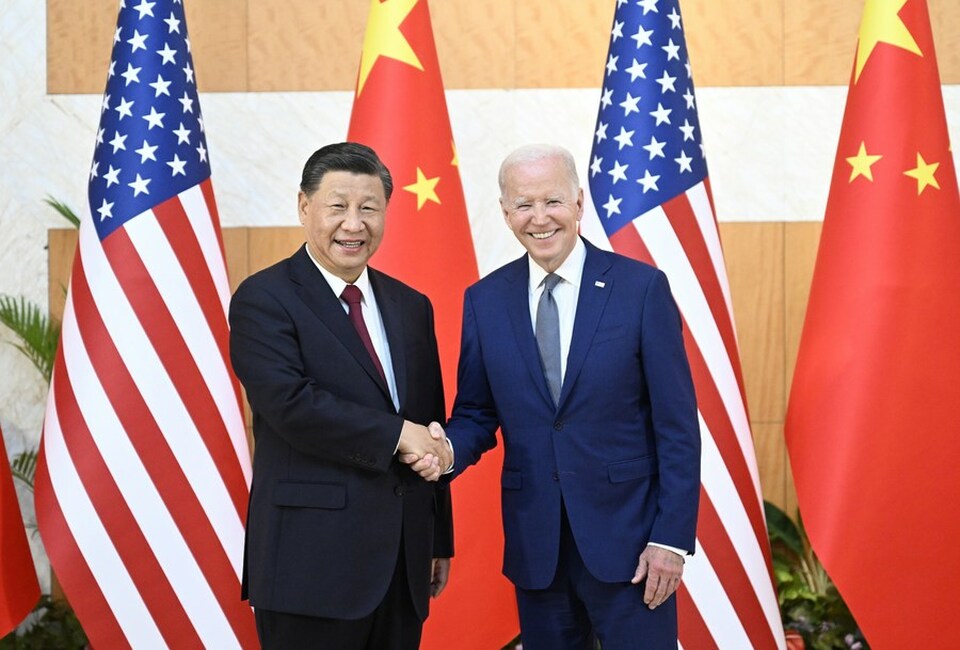
Jakarta. The recent G7 summit in Hiroshima and the subsequent G20 tourism meeting in Kashmir underscored the stark contrast between the two groups’ rhetoric. While the G20 emphasized its “one Earth, one family, one future” motto, the G7’s combative attitude could be summarized as “We must divorce China.”
For ASEAN member states, decoupling is not an option. While the region could benefit from production and investment shifting away from China to ASEAN countries, a full economic decoupling between the Chinese economy and the West could also result in trade diversion, higher production costs, and reduced welfare over the long term.
The push to decouple the American and European economies from China currently seems to be limited to sectors such as energy, semiconductors, information and communication technology, mining, and minerals. But decoupling is expected to affect nearly every industry, including machinery, mechanical appliances, electrical components, and automobiles.
Given that ASEAN economies are equally dependent on the United States, the European Union, China, and East Asia, the bloc must maintain neutrality, refrain from taking sides, and strengthen cooperation. By leveraging their growing economic and political influence, member states could promote peace, foster cooperation, and increase engagement with the international community.
Amid the intensifying geopolitical rivalry between the US and China, ASEAN countries must also deepen regional economic integration. Over the past two decades, intra-ASEAN trade as a share of members’ total trade has stagnated at around 22 - 23 percent. To be sure, members’ exports to the rest of the world have increased over this period. But ASEAN countries’ share of global trade barely increased between 2000 and 2022, growing from 6.4 to 7.8 percent
There are three possible explanations for the stagnation of intra-ASEAN trade since the turn of the century. The first is the region’s model of shallow integration. Because most ASEAN-made products are substitutes rather than complements, the scope for increased trade between members is inherently limited.
Second, stricter rules of origin and non-tariff measures could act as trade barriers. While these regulations and procedures are aimed at ensuring health, safety, and environmental protection, their design and implementation can inadvertently impede trade and investment.
Lastly, it is important to recognize that ASEAN is not a self-contained region. Member states rely heavily on investment and technology from countries such as Japan, South Korea, and China. And while the bloc functions as a united group, it is not a customs union, which means that member states may engage with other countries or blocs on their own. This flexibility enables members to pursue their own interests and seek diverse partnerships and agreements while maintaining the cohesion and vitality of the ASEAN community.
The Regional Comprehensive Economic Partnership, which includes all ten ASEAN countries, China, Japan, South Korea, Australia, and New Zealand, is a case in point. Representing roughly one-third of global GDP and one-quarter of the world’s total trade and investment, the RCEP is the world’s largest free-trade area, and its aim is to foster greater trade integration by reducing tariffs on 90 percent of product lines.
The Comprehensive and Progressive Agreement for Trans-Pacific Partnership (previously known as the Trans-Pacific Partnership) is another example. Since 2018, four ASEAN countries – Singapore, Vietnam, Brunei, and Malaysia – have joined the CPTPP, which accounts for roughly 13 percent of global GDP and aims to reduce tariffs on 98 percent of product lines.
The Indo-Pacific Economic Framework for Prosperity (IPEF), a newly established grouping launched by US President Joe Biden’s administration in May 2022, also seeks to foster regional partnerships. But the agreement has faced criticism for being exclusionary and divisive. In addition to the US, Japan, South Korea, India, Australia, and New Zealand, seven ASEAN countries – Singapore, Thailand, Indonesia, Malaysia, the Philippines, Vietnam, and Brunei – have joined the IPEF. But Cambodia, Laos, and Myanmar have been left out of this new framework.
Such exclusions could exacerbate economic disparities between ASEAN members and heighten regional tensions, offsetting the benefits of existing mega-regional trade agreements, such as the RCEP. Some critics have argued that the IPEF is largely symbolic and intended to appeal to American voters rather than implement effective policies that benefit its members. Likewise, trade ministers from across the Indo-Pacific recently convened in Detroit to discuss a series of measures aimed at bolstering supply chains for essential goods, such as semiconductors and critical minerals. But the agreement they reached lacks clear policy objectives beyond reducing dependency on China.
Given that they cannot afford to decouple from either side, the escalating rivalry between China and the West puts ASEAN countries in a difficult position. Trade between the bloc’s member states and Europe more than tripled between 2000 and 2022, from $110.5 billion to $342.3 billion. Similarly, ASEAN’s trade with the US surged from $135.1 billion to $452.2 billion. ASEAN exports to the US nearly quadrupled from $87.9 billion to $356.7 billion over the same period.
At the same time, trade between ASEAN and China reached $975.3 billion in 2022, an astounding 24-fold increase from 2000. ASEAN countries’ exports to China increased by a factor of 18 during this period, from $22.2 billion to $408.1 billion.
Moreover, East Asia, the US, and the EU are all significant sources of foreign direct investment in ASEAN countries. In 2021, East Asian countries accounted for 33 percent of total FDI in the region, while the US and EU accounted for 22 percent and 15 percent, respectively.
Given the depth of these economic ties, urging ASEAN countries to decouple from China is deeply unfair. It is also short-sighted because decoupling would undermine trade and economic development within the bloc, fueling political instability across the region.
---
Lili Yan Ing is the Secretary-General of the International Economic Association (IEA) and Lead Advisor of the Southeast Asia Region, Economic Research Institute for ASEAN and East Asia (ERIA).
The views expressed in this article are those of the author.
Tags: Keywords: as a preferred
Related Articles

IMF Upgrades Indonesia’s 2026 Growth Forecast to 5.1%
Indonesia has yet to beat Vietnam as the fastest-growing ASEAN economy.
ASEAN Digital Pact to Drive Cross-Border Payments
ASEAN is set to sign its digital economy pact, which Standard Chartered believes will change how the members do business with each other.
Indonesia Races with ASEAN Neighbors for Investments
Indonesia and its ASEAN neighbors are pursuing aggressive reforms to attract foreign investors, according to Investment Minister Rosan.
Indonesia’s US Trade Surplus Defies Tariffs, but Economists Warn Risks Remain
Indonesia posted a $12.47 billion surplus with the US in January-August 2026, up from $12.26 billion a year earlier.
ADB to Inject Another $3 Billion to ASEAN Tourism
Between 2015 and 2025, ADB has deployed over $3.7 billion to turn ASEAN into better tourist magnets.
‘ASEAN Members Don’t Always Agree, But We Stay Together’: Indonesia
Indonesia says ASEAN members “choose to keep talking, even when agreement is difficult”.
Indonesia Wants to Link QR Payment with Timor-Leste
In ASEAN, Indonesia's QRIS payment system is already available in Singapore, Thailand, and Malaysia.
Xi Says Looks Forward to Discussing 'Global Situation' with Trump
After officials literally rolled out the red carpet, Trump and First Lady Melania shook hands with Xi and his wife Peng Liyuan.
Hong Kong Investors Gain Equal Treatment in New ASEAN Deal
ASEAN has promised not to treat Hong Kong investors differently under a freshly inked deal.
Indonesia Says Still No Protests from ASEAN Neighbors over Haze
Indonesia maintains "good relations" with its ASEAN neighbors on tackling the transboundary haze, according to the Foreign Ministry.The Latest

Chandra Asri Group Receives Trade Finance Excellence Award, Reinforcing Its Role in Indonesia’s Industrial Development
Chandra Asri Group receives the Trade Finance Excellence Award at CIMB Niaga Business Summit 2026.
AEON MALL Deltamas Brings 11 Sports and Creative Competitions to AEONLYMPIC 2026
AEON MALL Deltamas hosts AEONLYMPIC 2026, featuring 11 sports and creative competitions, with more than 3,100 participants.
Indonesian Stocks Extend Losses for Third Day, Fall 3.64% to 4,996
Indonesian stocks fell 3.64% on Monday, extending losses for a third straight session amid MSCI concerns and tighter trading limits.
Prabowo Calls Meeting on Forest Fires as Haze Reaches Jakarta, Singapore
Prabowo summons senior officials to discuss forest fires as smoke reaches Jakarta and Malaysia pushes for regional action.
Jakarta Outranks Amsterdam in Global Public Transport Survey
Jakarta climbs two places to 15th in Time Out's 2026 public transport survey, with its governor citing better network integration.Most Popular
