



Modi's Party Well Ahead in Indian Elections But Opposition Stiffer Than Expected
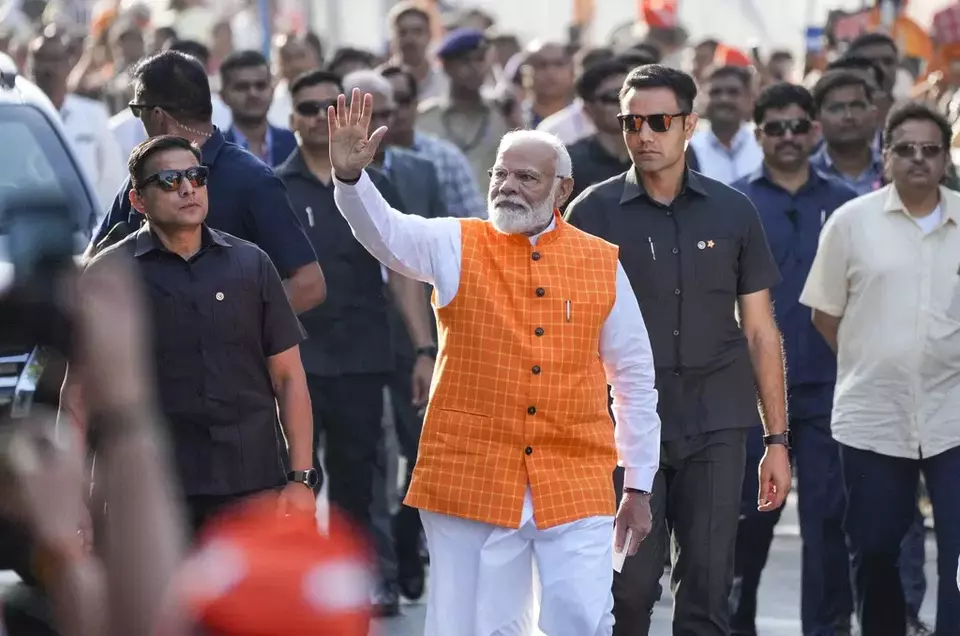
New Delhi. Prime Minister Narendra Modi's Hindu nationalist party showed a comfortable lead Tuesday, according to early figures reported by India's Election Commission, but was facing a stronger challenge from the opposition than had been expected.
The counting of more than 640 million votes cast over the past six weeks in the world’s largest democratic exercise was expected to take all day, with Modi widely expected to be elected to a third five-year term when the final result is declared.
If the 73-year-old Modi wins, it would only be the second time an Indian leader has retained power for a third term after Jawaharlal Nehru, the country’s first prime minister.
Some four hours into the counting, early leads reported by the Election Commission showed Modi’s Bharatiya Janata Party comfortably ahead of the main opposition Congress party.
The preliminary figures showed the BJP ahead in 240 constituencies out of 542 and winning one uncontested race. Congress was leading in 94 constituencies.
Modi's National Democratic Alliance group was leading in 287 constituencies, while the opposition INDIA alliance, led by the Congress party and its main campaign leader, Rahul Gandhi was leading in 225.
The Election Commission does not release data on the percentage of votes tallied, but counting was to go on throughout the day and early figures were expected to change.
Exit polling from the weekend had projected the NDA to win more than 350 seats. Indian markets, which had hit an all-time high on Monday, were down sharply in midday trading Tuesday, with benchmark stock indices -- the NIFTY 50 and the BSE Sensex -- both down by more than 7 percent.
Some 642 million people voted in the election, with an average 66 percent turnout across the seven phases, according to official data.
Extreme heat struck India as voters went to the polls, with temperatures higher than 45 degrees Celsius (113 Fahrenheit) in some parts of the country. The chief election commissioner Rajiv Kumar said officials had learned a valuable lesson. “We should have completed the election at least one month before,” he said. “We shouldn't have let it continue into so much heat.”
Temperatures were somewhat lower on Tuesday for the counting, but election officials and political parties still took precautions, hauling in large quantities of water and installing evaporative coolers for people outside the buildings where votes were being tallied and party headquarters.
On Tuesday, BJP workers outside the party's office in New Delhi performed a Hindu ritual shortly after the counting began. Meanwhile, supporters at the Congress party headquarters appeared upbeat and chanted slogans praising Gandhi, the party’s campaign face.
In his 10 years in power, Modi has transformed India’s political landscape. His popularity has outstripped that of his party’s and has turned a parliamentary election into one that increasingly resembles a presidential-style campaign. The result is that the BJP relies more and more on Modi’s enduring brand to stay in power, with local politicians receding into the background even in state elections.
“Modi was not just the prime campaigner, but the sole campaigner of this election,” said Yamini Aiyar, a public policy scholar.
His supporters see him as a self-made, strong leader who has improved India’s standing in the world, and credit his pro-business policies with making the economy the world’s fifth-largest.
But a decade of his leadership has also left the country deeply divided. Modi’s critics and opponents say his Hindu-first politics have bred intolerance, hate speech and brazen attacks against the country’s minorities, especially Muslims, who comprise 14 percent of the population.
India’s economy, one of the fastest-growing, has become more unequal under Modi. While stock markets reach record highs and millionaires multiply, youth unemployment has soared, with only a small portion of Indians benefitting from the economic boom.
The country’s democracy, Modi’s critics say, is faltering under his government, which has increasingly wielded strong-arm tactics to subdue political opponents, squeeze independent media and quash dissent. The government has rejected such accusations and said democracy is flourishing.
Tags: Keywords: as a preferred
Related Articles

Top Indian 'Cockroach' Leaders Sent to Jail after Protest
CJP founder Abhijeet Dipke praised the men, saying they "knew they could be thrown behind bars" but went ahead to wave the national flag.
Prabowo, Modi Inspect Prambanan Ahead of Joint Restoration Project
Prabowo and Modi visited Prambanan after Indonesia and India agreed to jointly restore the UNESCO-listed temple complex.
Prabowo-Modi Talks Skip Commercial Details on BrahMos Missiles, India Says
Asked about the details of the Brahmos contract, the Indian government says "commercial agreements are not discussed at the highest level.
Modi Secures BrahMos Missile Contract on Indonesia Trip
Indian Prime Minister Modi's visit to Jakarta unveils a contract for the BrahMos missile system, but the deal's value remains undisclosed.
Prabowo Welcomes Modi at Airport as Indonesia, India Seek Stronger Ties
Modi is scheduled to hold bilateral talks with Prabowo, attend an official state banquet, and address members of the Indian community.
Indonesia, India in ‘Advanced’ Talks for ‘Affordable’ BrahMos Missile
India says that the BrahMos missile system is a "very affordable and reliable system" which Indonesia can acquire.
India’s Modi to Meet Prabowo Next Week for Critical Minerals
India is also eyeing a joint venture partnership with Indonesia to ensure access to critical minerals.
Modi Meets Delcy Rodriguez as India Expands Venezuela Oil Imports
An official said Venezuela had become India’s third-largest crude oil supplier in recent weeks.The Latest

Jakarta Outranks Amsterdam in Global Public Transport Survey
Jakarta climbs two places to 15th in Time Out's 2026 public transport survey, with its governor citing better network integration.
MSCI Concerns, Tighter IDX Trading Rules Send Indonesian Stocks Down 5% by Midday
Indonesian stocks plunge 5% by midday as MSCI concerns weigh on sentiment and the IDX tightens its daily downside limit to 7%.
Jakarta Prepares 367 Health Facilities as Haze Reaches the Capital
Jakarta prepares 367 health facilities to treat potential haze-related illnesses after smoke from Sumatra and Kalimantan crosses the region.
Jakarta Expands Flood Prevention With New Water Storage Ponds
Jakarta opens two East Jakarta water storage ponds as it expands flood prevention efforts through reservoirs and river normalization.
Press Council Highlights AI Ethics at United Tractors Journalist Workshop
United Tractors’ 2026 journalist workshop highlights ethical AI use and the importance of trust and credibility in journalism.Most Popular
