



Indonesia Aims to Overtake Vietnam in Global Coffee Production
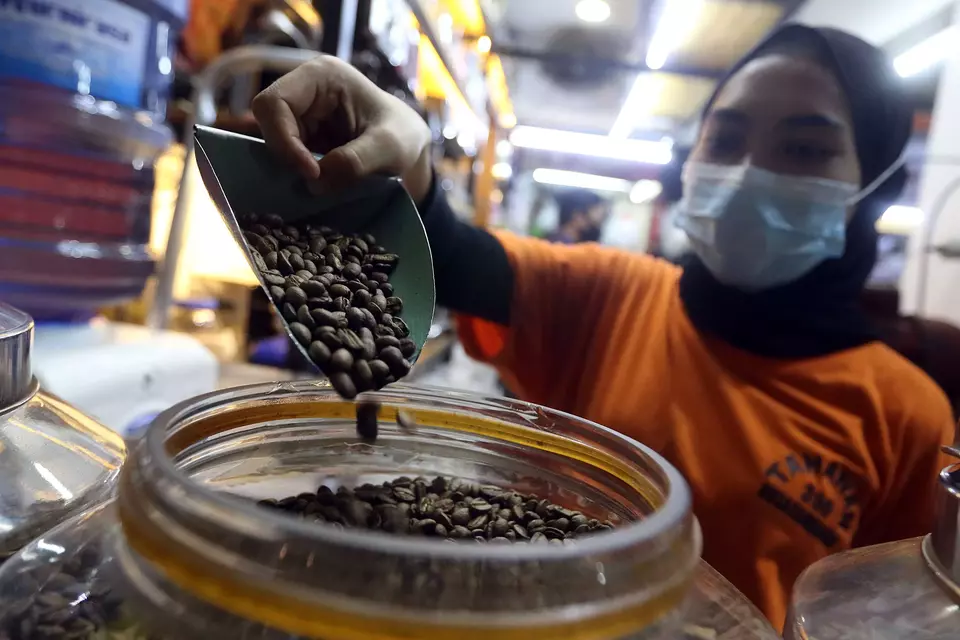
Jakarta. Indonesia is setting its sights on surpassing Vietnam to become the world’s second-largest coffee producer, as the government intensifies efforts to boost domestic output and tap into rising global demand.
Chief Food Affairs Minister Zulkifli Hasan, popularly known as Zulhas, said Indonesia currently ranks fourth globally with more than 700,000 tons of annual coffee production. He believes the figure can grow significantly with the right strategies in place.
“Prices are very favorable right now, so we need to increase productivity,” Zulhas said. He emphasized the need for better quality seedlings, improved post-harvest processing, and more competitive packaging to enhance the value of Indonesian coffee.
Indonesia, he noted, has vast tracts of land suitable for coffee cultivation --from the highlands of Aceh to the eastern reaches of Papua-- each producing beans with distinctive flavor profiles. The country currently boasts 54 Geographical Indications (GI) for coffee, comprising 26 for Arabica, 24 for Robusta, three for Liberica, and one for Excelsa.
“Coffee is not just a commodity, it is a way of life for communities across our country. From the Gayo highlands to the slopes of Toraja, coffee symbolizes hard work, cultural heritage, and national pride,” Zulhas said.
Indonesia is currently behind Brazil, Vietnam, and Colombia in global coffee production. Vietnam, the second-largest producer, is widely known for its large-scale Robusta cultivation. Vietnam produces 1.8 million tons of coffee annually.
To close the gap, Zulhas called for stronger collaboration between the government and private sector to unlock Indonesia’s full coffee potential.
According to the Central Statistics Agency (BPS), the country exported 342,220 tons of coffee worth $1.49 billion from January to September 2024. In comparison, coffee imports stood at just 67,650 tons, valued at $319.84 million.
Top export destinations included the Philippines (85,000 tons), the United States (31,730 tons), and Malaysia (32,330 tons), with the remainder shipped to various other countries. On the import side, Vietnam dominated with 47,270 tons, followed by Brazil (13,040 tons) and Malaysia (1,840 tons).
Tags: Keywords: as a preferred
Related Articles

Govt Targets Completion of 35,872 Village Cooperatives by August
Indonesia aims to complete 35,872 village cooperatives by August as the government prepares them to distribute subsidies and support farmersThe Latest

Court Hears of $5,000 Fee for Expedited Hajj Slots in 2023
A former Religious Affairs Ministry staffer testified that 181 pilgrims paid $5,000 each for expedited hajj departures in 2023.
Five Journalists Reported Missing While Covering Anak Krakatau Eruption
Five journalists and two boat crew members are missing after losing contact while covering the Anak Krakatau eruption off Banten.
Trump Tariffs Cripple EU Firms’ Confidence in ASEAN
As many as 81% of the surveyed European businesses admit that the US tariffs had weakened their confidence in ASEAN.
Rupiah Strengthens to Rp17,632 on Reserve Boost
The rupiah rose 0.05% to Rp17,632 as higher foreign exchange reserves offset geopolitical risks and US inflation concerns.
Stocks Climb 1% as Indonesia’s Reserves, Airport Operations Recover
Indonesian stocks rose 1% as stronger foreign reserves and airport reopenings lifted domestic market sentiment.Most Popular
