



Economist Says Social Assistance Should Not Create Dependency Among the Poor
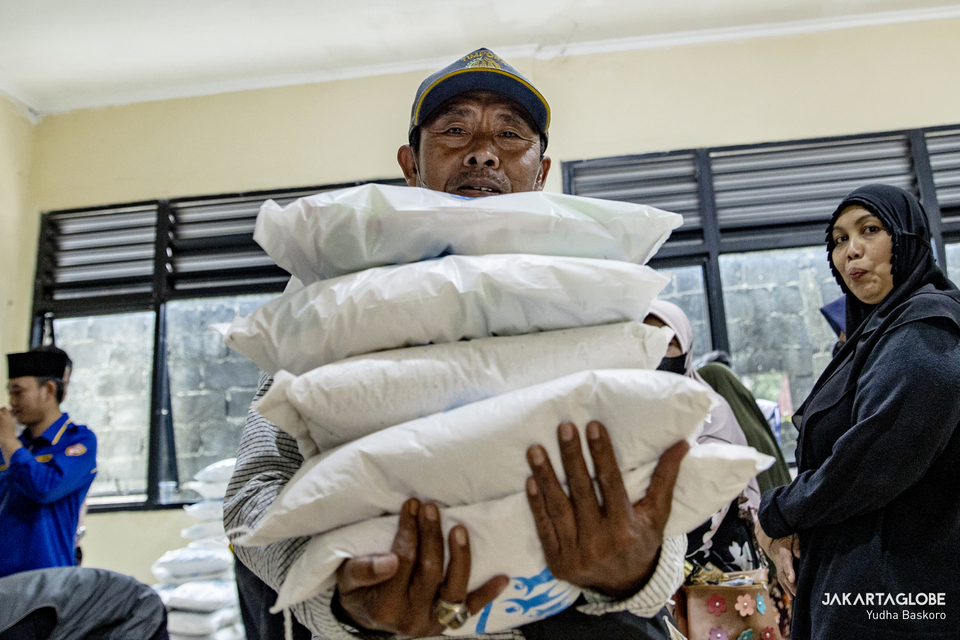
Jakarta. An economist from the University of Indonesia (UI), Telisa Aulia Falianty, believes that the social assistance program needs to be thoroughly evaluated so that it is not merely a short-term aid measure.
Social assistance is expected to help recipients move up the socio-economic ladder or improve their standard of living so they no longer need to rely on aid.
“For people to move up, social assistance alone is not enough; it must be accompanied by other programs such as the Indonesia Smart Card (KIP), the Pre-Employment program, and other initiatives like the Family Hope Program (PKH), improved access to education, and increased education budgets,” she explained.
Telisa said that the evaluation could start with data on household income deciles. This step is important to assess how far social assistance has empowered recipients economically.
To measure the success of poverty alleviation, Telisa noted, it cannot be assessed based on a single policy alone. It must be supported by other programs so that poverty can be reduced and more social assistance recipients can graduate from the program.
Another urgent strategic step is the integration of social data. The good news is that the Integrated Social Welfare Data (DTKS) is now considered consolidated, making monitoring easier and supporting the graduation process.
With integrated data, tracking households that have moved up economically becomes easier. It also facilitates the assessment of eligibility for social assistance recipients.
“So there really needs to be a system that improves over time, along with evaluations of the graduation process. We hope that when they move up or graduate, they can perform even better by increasing their productivity,” she said.
Telisa then mentioned Bank Indonesia’s idea of an integrated payment system, the Payment ID. In the context of social assistance, she believes Payment ID could be a solution and would be highly useful for tracking households that have moved up, monitored through their spending or increased savings.
In addition, Telisa said, there needs to be synergy among ministries and state agencies to help social assistance recipients become more economically empowered. Not only the Ministry of Social Affairs but also the Ministry of Cooperatives and SMEs can contribute to recipient graduation by supporting their businesses.
The Cooperatives Ministry can also participate by integrating with programs such as the Free Nutritious Meals program or the Merah Putih Village Cooperatives. In this way, these programs are expected to improve welfare and help more recipients move up the socio-economic ladder.
“This is so that recipients do not continue to create dependency. These programs must also foster self-reliance,” Telisa added.
Ultimately, the State Budget (APBN) can be more accurately targeted when distributing social assistance according to verified recipient data in the field, enabling more people to move up. The State Budget can then be optimized for policies with the expected multiplier effect.
Tags: Keywords: as a preferred
Related Articles

Govt Suspends Welfare Payments to 1.49 Million Households Over Suspected Online Gambling
Indonesia suspended welfare payments to 1.49 million households suspected of online gambling pending government verification.The Latest

Chandra Asri Group Receives Trade Finance Excellence Award, Reinforcing Its Role in Indonesia’s Industrial Development
Chandra Asri Group receives the Trade Finance Excellence Award at CIMB Niaga Business Summit 2026.
AEON MALL Deltamas Brings 11 Sports and Creative Competitions to AEONLYMPIC 2026
AEON MALL Deltamas hosts AEONLYMPIC 2026, featuring 11 sports and creative competitions, with more than 3,100 participants.
Indonesian Stocks Extend Losses for Third Day, Fall 3.64% to 4,996
Indonesian stocks fell 3.64% on Monday, extending losses for a third straight session amid MSCI concerns and tighter trading limits.
Prabowo Calls Meeting on Forest Fires as Haze Reaches Jakarta, Singapore
Prabowo summons senior officials to discuss forest fires as smoke reaches Jakarta and Malaysia pushes for regional action.
Jakarta Outranks Amsterdam in Global Public Transport Survey
Jakarta climbs two places to 15th in Time Out's 2026 public transport survey, with its governor citing better network integration.Most Popular
