



China Wants to Help ASEAN Switch to Renewables as Manila Faces Energy Emergency
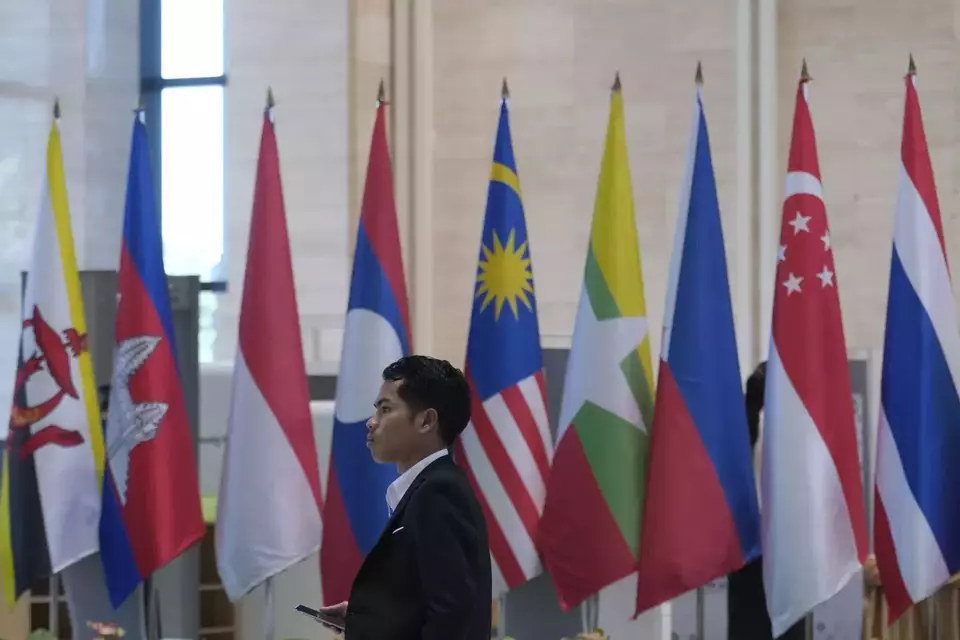
Jakarta. The Iran war energy crisis has opened doors for Beijing to help ASEAN switch to renewables, according to a Chinese envoy, as the Philippines became the world’s first country to declare an energy emergency.
The war-induced Strait of Hormuz shutdown had put energy shipments from the Middle East to a standstill. The global crude benchmark Brent even hit $103 per barrel on Thursday. Manila — now assuming ASEAN’s rotating chairmanship — recently announced a fuel emergency, while the Indonesian government claimed that Jakarta had not run out of supplies.
In a press briefing, Chinese Ambassador to ASEAN Wang Qing responded to a question on whether Beijing would lend a helping hand to shield Southeast Asian nations from the energy crisis. Wang responded that China was quite well-prepared thanks to its early shifts to emissions-free sources, and this could be something to work on together with the ASEAN states.
"We have done a lot of work for our energy transition. We are in a better position to tackle this challenge. Over 50% of our electricity comes from renewables, … be it hydrogen, solar, wind, and nuclear,” Wang saidon Thursday.
“We will continue to enhance our energy transition. I think it provides a new opportunity for China-ASEAN cooperation.”
Wang admitted that sources such as wind and solar could not meet 24/7 power needs. This brings the need to develop battery energy solar systems, another area that Beijing is willing to partner on.
A day earlier, Finance Minister Purbaya Yudhi Sadewa said that Indonesia has “not entered an energy emergency”, while warning that Jakarta should brace itself if the situation persists. He dismissed fiscal strain worries by saying that Jakarta would not make any changes to the state budget and energy subsidies for now.
Philippine President Ferdinand Marcos Jr had just announced that an energy emergency would enable his government “to implement responsive and coordinated measures”. The state of emergency, which will be in force for a year, will allow officials to take action against fuel hoarding and supply manipulation.
Iran has closed off the Strait of Hormuz — a critical waterway for oil delivery — in retaliation following US-Israeli strikes in late February. About two weeks ago, ASEAN economic ministers held a meeting to navigate the conflict. The 11-strong group highlighted the need to “diversify energy sources and supply routes, particularly through biofuels and renewables”. It is also open to working with its dialogue partners.
As of 2022, ASEAN’s renewables shares in its total primary energy supply reached only 15.6%, although this would mean the number had not taken into account its latest member, Timor-Leste. The sunny Indonesia is now looking to install 100 gigawatts of solar power within two years. Fellow ASEAN member Vietnam has just clinched a Russian deal that could revive its nuclear power ambitions.
Tags: Keywords: as a preferred
Related Articles

IMF Upgrades Indonesia’s 2026 Growth Forecast to 5.1%
Indonesia has yet to beat Vietnam as the fastest-growing ASEAN economy.
ASEAN Digital Pact to Drive Cross-Border Payments
ASEAN is set to sign its digital economy pact, which Standard Chartered believes will change how the members do business with each other.
Indonesia Races with ASEAN Neighbors for Investments
Indonesia and its ASEAN neighbors are pursuing aggressive reforms to attract foreign investors, according to Investment Minister Rosan.
ADB to Inject Another $3 Billion to ASEAN Tourism
Between 2015 and 2025, ADB has deployed over $3.7 billion to turn ASEAN into better tourist magnets.
‘ASEAN Members Don’t Always Agree, But We Stay Together’: Indonesia
Indonesia says ASEAN members “choose to keep talking, even when agreement is difficult”.
Indonesia Wants to Link QR Payment with Timor-Leste
In ASEAN, Indonesia's QRIS payment system is already available in Singapore, Thailand, and Malaysia.
Hong Kong Investors Gain Equal Treatment in New ASEAN Deal
ASEAN has promised not to treat Hong Kong investors differently under a freshly inked deal.
Indonesia Says Still No Protests from ASEAN Neighbors over Haze
Indonesia maintains "good relations" with its ASEAN neighbors on tackling the transboundary haze, according to the Foreign Ministry.
Vietnam’s $80 Billion EU Trade Shows Indonesia’s Untapped Potential: Ambassador
Indonesia-EU trade remains below its potential, with the bloc's ambassador pointing to Vietnam's $80 billion trade benchmark.
ASEAN Has a Haze Agreement But Regional Action Is Still Limited
ASEAN mechanism might be a realistic way to combat the region’s haze, although it comes with limitations, according to experts.The Latest

Chandra Asri Group Receives Trade Finance Excellence Award, Reinforcing Its Role in Indonesia’s Industrial Development
Chandra Asri Group receives the Trade Finance Excellence Award at CIMB Niaga Business Summit 2026.
AEON MALL Deltamas Brings 11 Sports and Creative Competitions to AEONLYMPIC 2026
AEON MALL Deltamas hosts AEONLYMPIC 2026, featuring 11 sports and creative competitions, with more than 3,100 participants.
Indonesian Stocks Extend Losses for Third Day, Fall 3.64% to 4,996
Indonesian stocks fell 3.64% on Monday, extending losses for a third straight session amid MSCI concerns and tighter trading limits.
Prabowo Calls Meeting on Forest Fires as Haze Reaches Jakarta, Singapore
Prabowo summons senior officials to discuss forest fires as smoke reaches Jakarta and Malaysia pushes for regional action.
Jakarta Outranks Amsterdam in Global Public Transport Survey
Jakarta climbs two places to 15th in Time Out's 2026 public transport survey, with its governor citing better network integration.Most Popular
