





Jakarta Has What It Takes to Become a Top 50 Global City: Expert
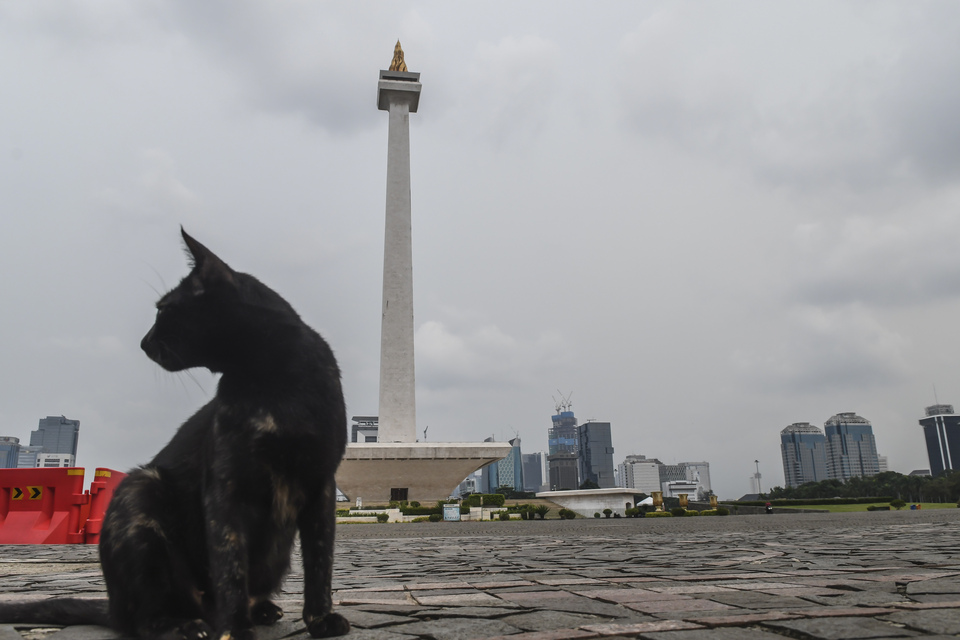
Jakarta. Jakarta has the potential to become one of the world’s top 50 global cities within five years, according to urban planning expert Nirwono Yoga, who believes the target is both realistic and achievable with the right strategy and consistent execution.
The capital currently ranks 74th in the 2024 Kearney Global Cities Index, and the Jakarta provincial government is aiming to climb at least five positions each year to reach the top 50 by 2030. Nirwono, who also serves as Special Staff to the Jakarta Governor, outlined three key priorities to realize the vision: improving human capital, promoting globally competitive Betawi cultural identity, and developing world-class business and urban destinations.
“The foundation is quality human resources. Every Jakarta resident should have access to at least a high school education and ideally, up to the university level,” Nirwono said during an urban policy forum on Monday.
He praised existing education programs like the Jakarta Smart Card (KJP) and the Jakarta University Student Card (KJMU), which provide financial and access support to thousands of students across the capital. He also called for a stronger effort to elevate Betawi culture onto the global stage, without compromising its authenticity.
"Culture must be presented in formats that the international audience can appreciate, while still holding true to its roots. That’s one of Jakarta’s biggest challenges,” he said.
Nirwono pointed to several urban districts with high potential for development, including Blok M, Kota Tua, Glodok, Ancol, and the Jakarta International Stadium area. Transit-oriented hubs like Dukuh Atas and Bundaran HI, he said, should be leveraged as strategic growth centers.
Nirwono stressed that Jakarta should benchmark itself against regional neighbors like Bangkok and Kuala Lumpur, rather than immediately aiming for top-tier cities like New York or Tokyo. “Bangkok, for instance, thrives as a tourism hub that highlights local diversity, something Jakarta can also develop,” he noted.
Jakarta Governor Pramono Anung echoed the call for transformation, stating in a May forum that the capital must reform its education, transportation, and governance sectors to attract global recognition and investment. “If we want to reach the top 50, we must first fix the basics, especially education,” he said.
More than 707,000 students currently benefit from the KJP, and nearly 17,000 from the KJMU. The city has also extended library and museum hours and resolved diploma issues for thousands of residents this year.
Jakarta's efforts also include a broader overhaul of its bureaucracy to increase transparency and attract more private investment. In 2024, Jakarta recorded Rp 241.9 trillion ($14.8 billion) in total investment, with nearly half coming from foreign direct investment.
To further boost investment, Pramono plans to launch the Jakarta Collaboration Fund and encourage city-owned enterprises to pursue IPOs. However, he acknowledged legal uncertainties surrounding Jakarta’s administrative status, as the city remains the national capital despite the planned relocation to Nusantara.
Tags: Keywords:The Latest

JCI Posts Strongest Weekly Gain in Months on Debt Confidence
Indonesia's benchmark index climbed 4.24% this week as healthy external debt data lifted sentiment despite global uncertainties.
Febrie Adriansyah Denies All Allegations After 11-Hour AGO Questioning
Former prosecutor Febrie Adriansyah denied all allegations, including claims he received Rp 50 billion, after an 11-hour AGO questioning.
Jakarta Governor Says Civil Servants Can Stay Up for World Cup Final
Jakarta Governor Pramono Anung says civil servants are free to watch the World Cup final, as long as public services remain unaffected.
Dry Season Drains Ciliwung River, Threatening Water Supply in Greater Jakarta
The Ciliwung River's water level has remained at zero for three days, raising concerns over water supplies for Bogor and Jakarta.
AGO Questions Ex-Senior Prosecutor Febrie Adriansyah as Corruption Suspect
Former senior prosecutor Febrie Adriansyah was questioned as a suspect after police transferred three corruption cases to the AGO.Most Popular
