



Rupiah Is Considered Among World’s 10 Weakest — But Is That True?
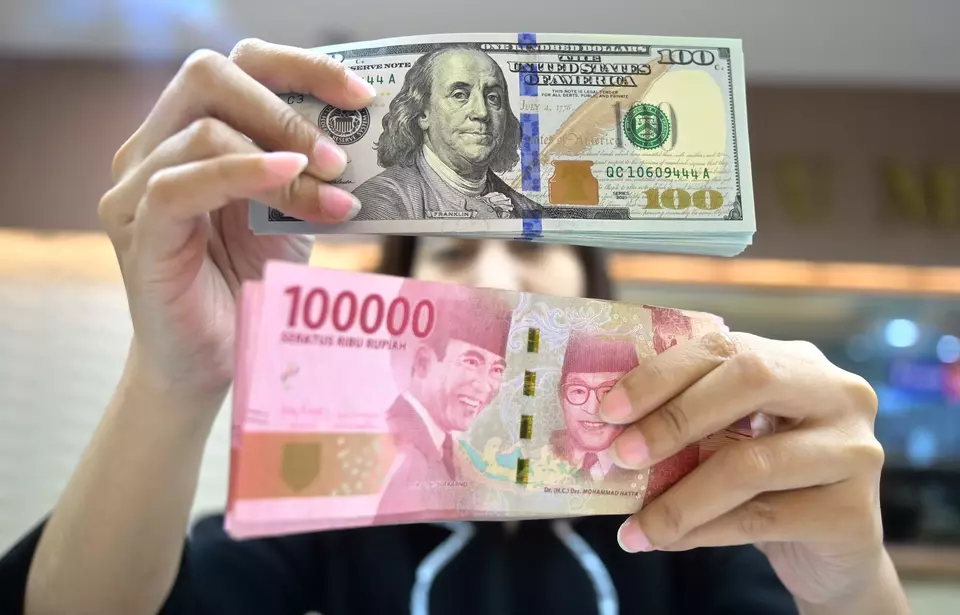
Jakarta. The Indonesian rupiah has been classified as one of the world’s ten weakest currencies by Forbes, ranking fifth after the Laotian kip.
However, the label “weak” can be misleading. As Forbes noted in its Jan. 9 edition, the ranking is based solely on “the number of units you’d receive in exchange for one US dollar,” rather than on macroeconomic stability or underlying economic fundamentals.
In other words, the classification reflects nominal exchange levels, not the strength or resilience of an economy.
On that date, one US dollar bought about Rp16,849, compared with roughly 89,556 Lebanese pounds — the weakest currency on the list — and around 42,112 Iranian rials, ranked second.
In Iran’s case, international economic sanctions, domestic political instability, and regional conflicts — including Israel’s military actions — have placed sustained pressure on the rial, helping explain its continued depreciation against the dollar.
Indonesia presents a markedly different picture. The country has enjoyed political stability over the past two decades, while its economy has expanded at an average rate of about 5% annually in the post-pandemic period. Indonesia also remains Southeast Asia’s largest economy by gross domestic product.
Still, Forbes noted that “its national currency has tumbled when compared with others due to a combination of high inflation and recessionary fears.”
Indonesia’s inflation rate stood at 2.92% throughout 2025, comfortably below the government’s upper tolerance level of 3.5%.
Crucially, the “weak currencies” category in the Forbes ranking refers to nominal value, not to economic instability — though the distinction may be less relevant in cases such as Iran, where currencies are also poorly managed or highly volatile.
The Lebanese pound, for example, has been under severe pressure for years due to a depressed economy, runaway inflation, high unemployment, a banking-sector collapse, and persistent political unrest, according to Forbes.
Read More:
Forget the Dollar: Indonesia, Japan Agree to Settle Cross-Border Transactions in Local CurrenciesWhile the rupiah has weakened against the dollar in recent weeks, its depreciation has been gradual and far less severe than the collapse seen in currencies such as the Iranian rial.
Indonesia could, in theory, make the rupiah appear “stronger” overnight by redenominating it — removing three zeros — without changing any real economic fundamentals. Such a plan has appeared on the Finance Ministry’s agenda in the past, but it has faced resistance from economists and business groups, who warn of costly transitions, including widespread accounting adjustments and potential public confusion.
The rupiah’s global reputation, meanwhile, remains heavily shaped by history. During the 1997–1998 Asian financial crisis, the currency lost more than 80% of its value, an episode that continues to loom large in investor memory.
That crisis became a defining reference point for foreign investors, cemented a long-lasting perception of fragility, and still influences the risk premiums applied to Indonesian assets today — despite decades of stronger macroeconomic management.
The 10 weakest currencies in the world, according to Forbes:
- Lebanese pound (LBP) – Lebanon – ~89,556 LBP
- Iranian rial (IRR) – Iran – ~42,112 IRR
- Vietnamese dong (VND) – Vietnam – ~26,345 VND
- Laotian kip (LAK) – Laos – ~21,663 LAK
- Indonesian rupiah (IDR) – Indonesia – ~16,849 IDR
- Uzbekistani som (UZS) – Uzbekistan – ~11,861 UZS
- Guinean franc (GNF) – Guinea – ~8,658 GNF
- Burundian franc (BIF) – Burundi – ~8,754 BIF
- Malagasy ariary (MGA) – Madagascar – ~4,637 MGA
- Paraguayan guarani (PYG) – Paraguay – ~6,619 PYG
 as a preferred
Related Articles

Rupiah Buckles Under MSCI Pressure, Sinks Past Rp 18,000
Rupiah fell 0.50% to Rp 18,027 per dollar as MSCI’s proposed downgrade of Indonesia’s market status rattled investor confidence.
Rupiah Breaches Rp 18,000 per Dollar on Tuesday as US Yields Pressure Emerging Markets
Rupiah fell to Rp 18,002 per US dollar as a stronger greenback and elevated US yields pressured emerging-market currencies.
Rupiah Slides Toward Rp 18,000 as Asian Currencies Weaken
rupiah weakened 0.34% to Rp 17,964 per dollar, nearing Rp 18,000 as Bank Indonesia stepped up currency stabilization efforts.
Economist Urges Bank Indonesia to Step Up Intervention as Rupiah Nears Rp18,000
The rupiah nears Rp18,000 per dollar as a stronger US currency, high oil prices and capital outflows intensify pressure.
Rupiah Edges Higher as Iran Talks, US-China Truce Ease Pressure
Rupiah rose 0.07% to Rp 17,903 on Friday as easing geopolitical tensions and a US-China trade truce supported the currency.
BI Cites US Treasury Yields, $100 Oil as Rupiah Comes under Pressure
The rupiah weakened toward Rp 17,900 as rising US Treasury yields, oil above $100 and portfolio outflows pressured the currency.
Rupiah Extends Losing Streak to Eight Days as Oil Prices Top $100
Rupiah extends its losing streak to eight days as Middle East tensions and oil prices above $100 pressure the currency.
Rupiah Slides to Rp 17,753 as Fed Raises Rates
Rupiah falls 0.32% to Rp 17,753 per dollar as the Fed raises rates and Middle East tensions keep markets on edge.
Rupiah Slides to Rp 17,611 as Middle East Conflict Fuels Oil, Inflation Fears
Rupiah fell 0.36% to Rp 17,611 as the US-Iran conflict and oil prices above $100 fueled inflation and fiscal concerns.
Rupiah Strengthens to Rp17,632 on Reserve Boost
The rupiah rose 0.05% to Rp17,632 as higher foreign exchange reserves offset geopolitical risks and US inflation concerns.The Latest

Ye Concert, Other Events to Draw 130,000 to GBK, Here’s What to Know
Around 130,000 visitors are expected at Jakarta’s GBK on Saturday as Ye’s concert and several major events take place.
Indonesia Allocates Rp 722 Billion for Year-End Flight Ticket Tax Relief
Indonesia allocates Rp 722 billion to cover domestic flight ticket VAT during the 2026/2027 Christmas and New Year holidays.
Greece Floats Shipbuilding Partnership with Indonesia
Greece says that it possesses “extensive expertise” as it woos Indonesia in shipbuilding partnership.
Indonesian Stocks Rally 4.9%, but Foreign Investors Keep Selling
Indonesia’s JCI rose 4.9% last week, but foreign selling and MSCI downgrade risks continue to cloud the market outlook.
Ye Concert in Jakarta to Deploy 2,000 Security Personnel
More than 2,000 personnel will secure Ye’s Jakarta concert on Saturday, as organizers urge fans to use public transport.Most Popular
