



Prabowo's Economic Council Prioritizes Middle-Class Support to Counter Economic Slowdown
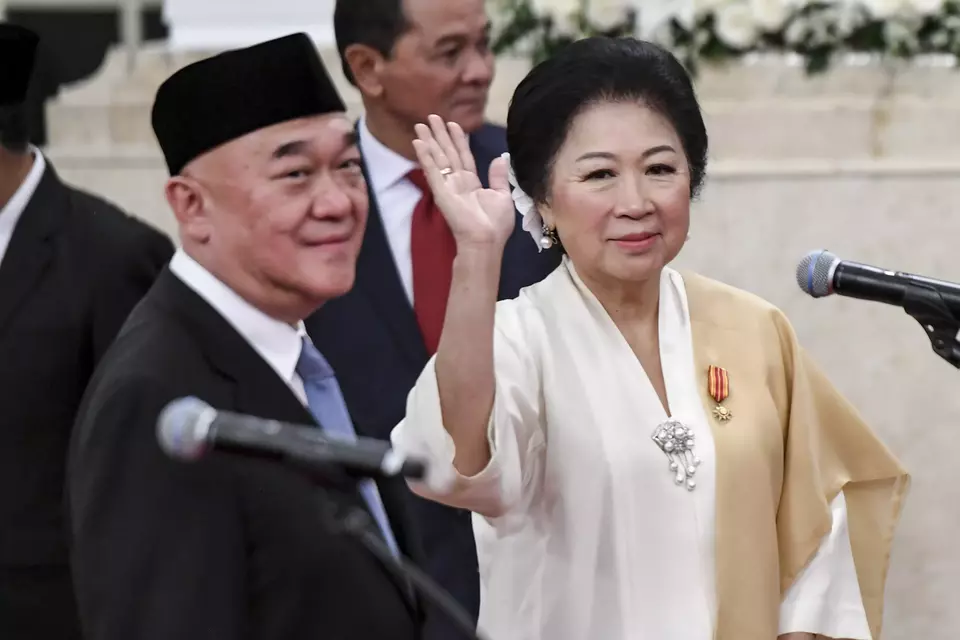
Jakarta. President Prabowo Subianto has appointed members of the National Economic Council (DEN) for the 2024-2029 term, Indonesia's leading economic advisory body. The inauguration ceremony took place Tuesday at the State Palace in Jakarta, with former Trade Minister and World Bank Managing Director Mari Elka Pangestu named as the council’s deputy chair under DEN Chair Luhut Binsar Pandjaitan.
DEN, tasked with advising the government on economic policy, will provide recommendations based on national and global economic trends and help shape strategic decisions in fiscal, monetary, and real-sector policies. The council’s first priority will be to provide recommendations on boosting Indonesia’s growth rate, which slowed to 4.95 percent year-on-year in the third quarter.
Joining the council are six prominent figures, including former Finance Minister Chatib Basri, AKR Corporindo President Director Haryanto Adikoesoemo, Padjadjaran University Economics Professor Arief Anshory Yusuf, Verdhana Sekuritas Indonesia Managing Partner Heriyanto Irawan, former Maritime Affairs Deputy at the Maritime and Investment Coordinating Ministry Muhammad Firman Hidayat, and Septian Hario Seto, former Deputy for Investment and Mining Affairs at the same ministry.
After the ceremony, President Prabowo and DEN members discussed strategies to boost economic growth in the fourth quarter. Deputy Chair Mari Elka Pangestu emphasized the need for actionable steps to sustain growth, particularly amid weakening middle-class purchasing power, which contributed to a drop in GDP growth to 4.9 percent, its lowest rate in 13 years.
“To ensure growth in the fourth quarter, we recommend strengthening middle-class purchasing power, which has declined and affected consumption levels,” Mari Elka said.
She also advised optimizing government spending as a short-term economic stimulant and advocated initiatives to improve the investment climate to sustain higher growth in the longer term.
Mari Elka, who also serves as the President’s Special Envoy for International Trade and Multilateral Cooperation, outlined potential measures, including direct cash assistance (BLT) to ease inflation concerns as global oil prices rise. While lower-income groups currently receive social assistance, she noted the need for programs specifically targeting the middle class.
Additionally, she discussed the possibility of reallocating subsidies into direct cash aid to ensure support reaches those most in need. “The primary goal is to ensure that subsidies effectively benefit low-income households, whether through direct aid, reduced prices, or a combination. These options are still under review,” she said.
The Indonesian economy grew at a slower pace of 4.95 percent year-on-year (yoy) in the third quarter of 2024, according to the National Statistics Agency (BPS). The economy grew by 5.11 percent yoy in Q1-2024 but then slowed to 5.05 percent yoy the following quarter.
Tags: Keywords: as a preferred
Related Articles

Indonesia Sets Out 2027 Economic Transformation Plan to Drive 8% Growth
Indonesia is accelerating downstreaming, investment and SOE reforms as it seeks new growth engines and targets 8% economic growth.
Indonesia 2027 Budget Explained: Growth, Inflation, Rupiah and Deficit Targets
Prabowo targets 6% growth, 2.5% inflation and a 2.4% deficit as Indonesia unveils key assumptions for its 2027 budget.
DEN Says Policy Coordination Crucial Amid Rupiah Weakness, Global Volatility
DEN says coordinated fiscal and monetary policies are crucial to safeguard macroeconomic stability and investor confidence.
Weak Institutions Keep Asia Stuck in Middle-Income Trap: ADBI Dean
Weak institutions and fragmented policymaking may be a bigger barrier to high-income status than growth itself, ADBI says.
Economic Buffer Under Pressure as Middle Class Continues to Shrink
BI’s surprise rate hike and a 32% fuel price increase are squeezing Indonesia’s middle class, raising risks of economic decline.
Indonesia Aims for Rp 16,800-17,500 Rupiah in 2027 Budget
Indonesia targets inflation of 1.5%-3.5% and a rupiah range of Rp 16,800-17,500 per US dollar under its agreed 2027 state budget framework.
JCI Soars 2.7% as BI Rate Hike Boosts Investor Confidence
JCI jumped 2.7% as investors welcomed BI's rate hike, rupiah stability, and calls for greater fiscal discipline.
National Economic Council Pushes MBG Efficiency
DEN called for a more efficient MBG program as a weaker rupiah raises risks of higher prices and pressure on household spending.
Indonesia’s Growth Paradox: Higher Growth, Poorer People
Indonesia’s middle class is shrinking despite strong economic growth, raising fears over jobs and inequality.
Kadin Warns Weak Rupiah is Squeezing Middle-Class Consumers
Indonesia’s middle class faces mounting pressure as the rupiah weakens past Rp 17,700 per dollar.The Latest

Chandra Asri Group Receives Trade Finance Excellence Award, Reinforcing Its Role in Indonesia’s Industrial Development
Chandra Asri Group receives the Trade Finance Excellence Award at CIMB Niaga Business Summit 2026.
AEON MALL Deltamas Brings 11 Sports and Creative Competitions to AEONLYMPIC 2026
AEON MALL Deltamas hosts AEONLYMPIC 2026, featuring 11 sports and creative competitions, with more than 3,100 participants.
Indonesian Stocks Extend Losses for Third Day, Fall 3.64% to 4,996
Indonesian stocks fell 3.64% on Monday, extending losses for a third straight session amid MSCI concerns and tighter trading limits.
Prabowo Calls Meeting on Forest Fires as Haze Reaches Jakarta, Singapore
Prabowo summons senior officials to discuss forest fires as smoke reaches Jakarta and Malaysia pushes for regional action.
Jakarta Outranks Amsterdam in Global Public Transport Survey
Jakarta climbs two places to 15th in Time Out's 2026 public transport survey, with its governor citing better network integration.Most Popular
