



Prabowo’s $1.5 Billion Economic Stimuli: Are They Good Enough?

Jakarta. When people run out of money amidst today's economic challenges, they can only pin their hopes on government policies.
Indonesia’s economic growth had slowed to 4.87 percent year-on-year in the first quarter of 2025. This marked the lowest Q1 growth that the populous country had ever witnessed in the past three years.
The statistics painted a grim picture of the economy, although the government tried to calm the worries by saying that Indonesia was among the fastest-growing economies in the G20.
Indonesia’s monthly deflation also reached 0.37 percent in May. This was the third deflation that the country recorded this year -- something that analysts feared could be a sign of a weak purchasing power. The Organization for Economic Cooperation and Development (OECD) has also trimmed its 2025 forecasts for Indonesia to 4.7 percent and 4.8 percent for the following year.
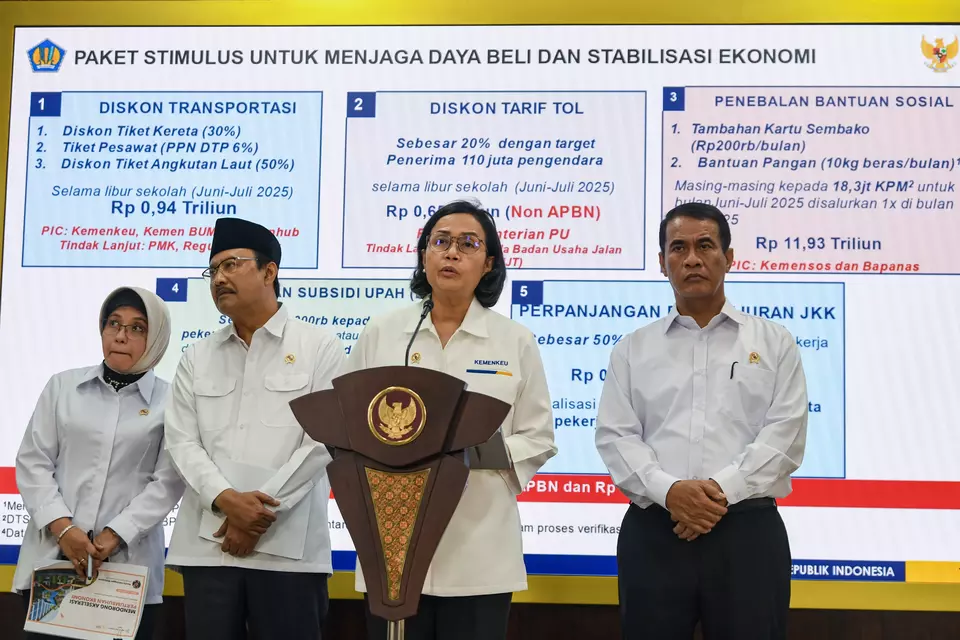
As fears over sluggish economy mount, the government recently unveiled economic stimuli worth Rp 24.4 trillion or $1.5 billion to spur consumption during the school holidays, eventually putting the second quarter growth back in the 5 percent range. There were five stimulus packages in the Prabowo Subianto administration’s latest economic move.
The government had even set aside Rp 23.6 billion in state money for this program alone. Indonesia would use other sources outside the state budget to cover the rest of the costs.
The first package -- worth totaling Rp 940 billion -- targeted mass transportation as the government gave a 30 percent discount for train tickets, and halved sea transport tickets. The government was willing to bear the value-added tax (VAT) on airfares.
Tollway tariffs are also subject to a 20 percent deduction during the school holidays. This program is worth Rp 650 billion and will benefit 110 million drivers traveling on the toll roads.
The Prabowo government is handing out 10 kilograms of rice and additional staple food aid of Rp 200,000 to 18.3 million families in need for the next two months.
As many as 17.3 million low-income workers, including over 500,000 contract-based teachers, have their monthly subsidies doubled to Rp 300,000. The government has allotted around Rp 10.7 trillion for this financial assistance alone.
The government has also extended the 50 percent discount on occupational accident insurance premiums for 2.7 million workers in the labor-intensive sectors. The Rp 200 billion expected spending for this package, however, will not come from the state budget.
“Hopefully, we can bring the Q2 growth close to 5 percent, beating forecasts. … If we can keep this up, we might be able to bring down our poverty and unemployment rates at a much faster pace,” Finance Minister Sri Mulyani said when announcing the stimulus packages.
The Forgotten Middle Class
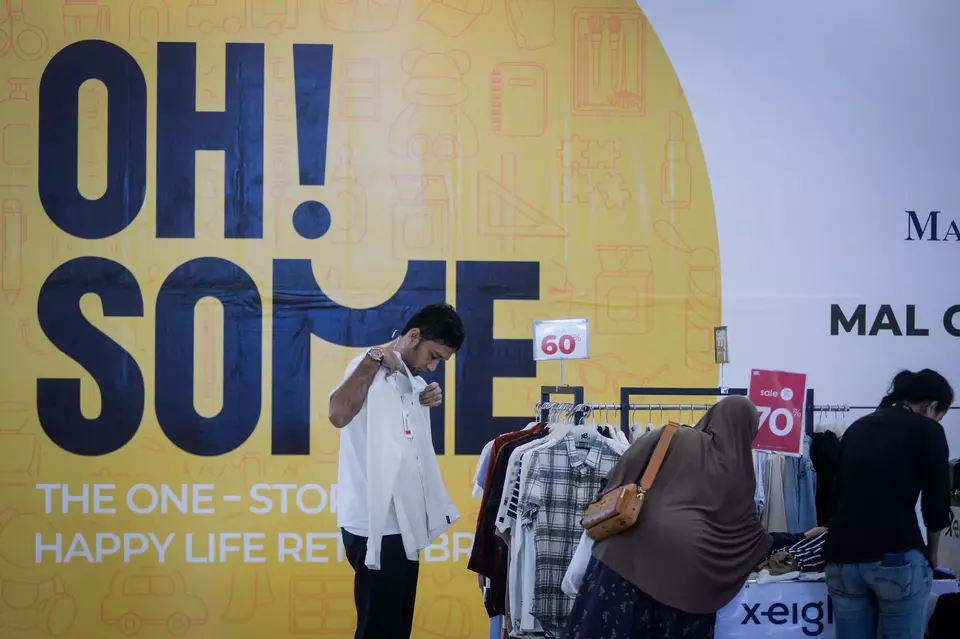
Despite the large spending allocated for the aforementioned programs, experts feared that the policy had neglected Indonesia’s shrinking middle class. Esther Sri Astuti, an analyst at the think-tank Indef, said that the economic slowdown would not only impact poor families, but could deal a fatal blow to the middle class.
“All this time, the government’s stimuli have never really helped because they were too focused on low-income households. The middle class is also struggling, and ironically, this group of people is our country’s biggest taxpayers,” Esther said.
According to the Central Statistics Agency (BPS), the size of the Indonesian middle class has dropped from 57.3 million people in 2019 to around 47.9 million as of last year. In other words, the middle class currently makes up around 17.1 percent of the entire population.
Data showed that some 9.5 million who used to be classified as middle class had fallen to the lower income group over the same five-year period. Esther fears that the consumption structure would weaken if this trend continues.
“We can’t use social assistance as a stimulus for the middle class. They don’t need cash aid, but access to education and more affordable healthcare,” Esther stated.
High interest rates, installments, and living costs have also added financial pressure to the middle-income group. The economist believes the government should consider interest subsidies or regulations that can reduce the net interest margin.
"Economic stimulus must reach all walks of life. We must not let the middle class suffer in silence from the unequal policies,” Esther said.
Likewise, Bhima Yudhistira -- who heads the think-tank Celios -- also urged the government to consider lowering the VAT from 11 percent to 9 percent. He revealed that fellow ASEAN member Vietnam mulls a 2 percentage point cut in its VAT rate until end-2026.
The analyst said that a VAT cut wouldn’t automatically mean smaller state revenue. The increase in state income from corporate income tax and employee income tax would compensate for the possible decline in VAT revenue.
Bhima also nudged the government to raise the non-taxable income threshold. Indonesia currently has its non-taxable income level capped at Rp 4.5 million a month or Rp 54 million a year. Bhima added: “Ideally, we should raise its level to between Rp 7 million and Rp 8 million a month so the middle-class people have more money to spend.”
Gov’t Needs A Long-Term Strategy
According to Mohammad Faisal, the director of the economic think-tank Core Indonesia, the government’s latest economic movie still fails to address the root cause of the problem. Faisal also sees it as more of a short-term strategy.
“While such stimuli can give a push to consumption, their effects do not last long. Once the programs end, the situation will return to normal. If the government doesn’t know what to do next, this consumption push will die down, and we will be back to square one,” Faisal said.
This calls for a continuous, long-term solution that emphasizes raising people’s income and creating jobs, be it in the formal or informal sectors. It would also be best for the government to prioritize labor-intensive formal sectors such as manufacturing, agriculture, and trade, according to Faisal, while citing that they could generate a multiplier effect on the economy. Not only will they generate jobs, but such sectors can also give a positive chain reaction in the informal sectors.
“If Indonesia can effectively move its formal sector, the country should be able to increase its consumption more evenly and sustainably. This is not just about a temporary stimulus, but this is how we build a stronger economic foundation,” Faisal remarked.
Indonesian businesspeople are also keeping their fingers crossed for economic stimuli that boost production. Shinta Kamdani, who chairs the Indonesian Employers Association (Apindo), highlighted that capital-intensive sectors would need policies that could cut production costs.
The government should also think of ways to make Indonesian products more competitive in the global market. The seasoned businesswoman also added that economic stimuli could not be a standalone policy, but should be something that was part of a more comprehensive policy mix.
“A combination of consumption drivers, the strengthening of investment and exports, production incentives, as well as the stability of the said policies … This mix will be our key to a more sustainable growth,” Shinta said.
--
B-Universe journalists Alfida Rizky Febrianna, Arnoldus Kristianus, Ilham Oktafian, Leonald AL Cahyoputra, and Rama Sukarta also contributed to the story.
Tags: Keywords: as a preferred
Related Articles

ADB Sees Indonesia Growing 5.2%, Below Govt Target
Indonesia wants to attain 5.4% growth in 2026, and expand by at least 6% the following year.
Indonesia Maintains Strong Economic Fundamentals: Govt
Throughout 2025, the Indonesian economy rose by 5.11% year-on-year (yoy), followed by a 5.61% yoy expansion in Q1 2026.
IMF Upgrades Indonesia’s 2026 Growth Forecast to 5.1%
Indonesia has yet to beat Vietnam as the fastest-growing ASEAN economy.
‘Only Time Will Tell’: Indonesia on World Bank’s 5.2% Forecast
Indonesia aims to grow 5.4% in 2026 and expand further by 6% the following year, topping the World Bank's 5.2% forecasts.
Indonesia Already Preparing For Next Pandemic: Prabowo’s Brother
Hashim Djojohadikusumo says that "Indonesia is one of the countries that will survive the next Covid-19 pandemic".
Indonesian Stocks Flat as Investors Await September Inflation Data
Indonesian stocks were flat as investors awaited September inflation data amid concerns over rising oil prices and inflation.
Economists Urge Prabowo to Set Realistic Targets in 2027 Budget Address
It has been a tradition for Indonesian presidents to lay out their future economic ambitions before the Independence Day on Aug. 17.
How Indonesian Traditions Can Drive Local Economy
The Indonesian government sees opportunities in driving the local economy by preserving local traditions.
Sudden Pertamax Price Hikes to Hurt Indonesia’s Middle Class
Pertamax prices rose from Rp 12,300 to Rp 16,250 (about $0.68-$0.90) per liter, possibly dealing a fatal blow to Indonesia's middle class.
Indonesia's Budget Deficit Hits 0.70% of GDP at End-May
The deficit stood at around Rp 180.4 trillion ($10 billion), according to Finance Minister Purbaya Yudhi Sadewa.The Latest

Ye Concert, Other Events to Draw 130,000 to GBK, Here’s What to Know
Around 130,000 visitors are expected at Jakarta’s GBK on Saturday as Ye’s concert and several major events take place.
Indonesia Allocates Rp 722 Billion for Year-End Flight Ticket Tax Relief
Indonesia allocates Rp 722 billion to cover domestic flight ticket VAT during the 2026/2027 Christmas and New Year holidays.
Greece Floats Shipbuilding Partnership with Indonesia
Greece says that it possesses “extensive expertise” as it woos Indonesia in shipbuilding partnership.
Indonesian Stocks Rally 4.9%, but Foreign Investors Keep Selling
Indonesia’s JCI rose 4.9% last week, but foreign selling and MSCI downgrade risks continue to cloud the market outlook.
Ye Concert in Jakarta to Deploy 2,000 Security Personnel
More than 2,000 personnel will secure Ye’s Jakarta concert on Saturday, as organizers urge fans to use public transport.Most Popular
