



OJK Sets $1.5 Trillion Stock Market Goal for 2031
Jakarta. Indonesia’s Financial Services Authority (OJK) is targeting a significant expansion of the country’s capital markets, aiming to lift total market capitalization to Rp 25 quadrillion ($1.5 trillion) by 2031, an official said on Wednesday.
The figure would be equivalent to roughly 80% of Indonesia’s current gross domestic product (GDP), underscoring the regulator’s ambition to deepen the role of capital markets in financing economic growth.
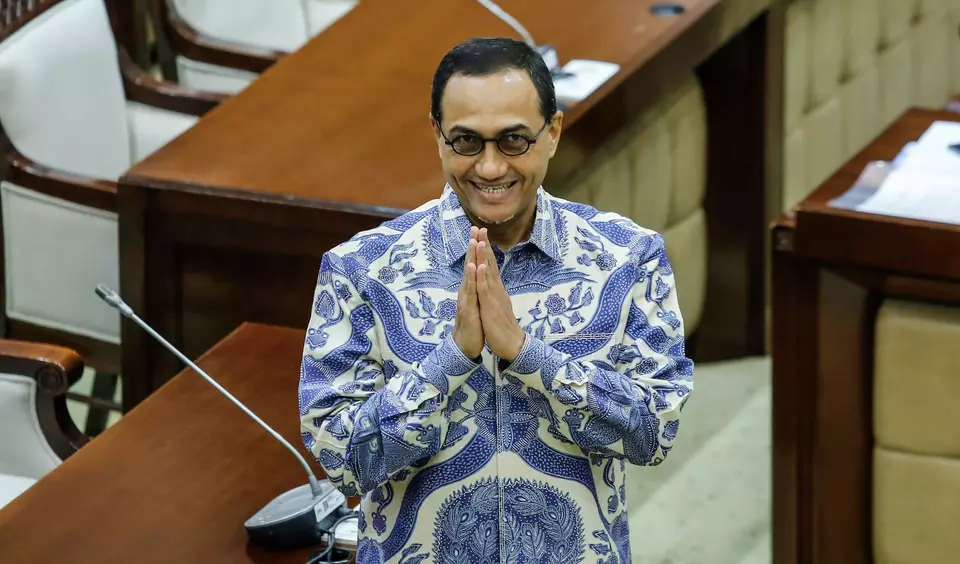
The vision was presented by Hasan Fawzi during a confirmation hearing at the parliament complex for his nomination as OJK’s Executive Head for Capital Markets, Derivatives, and Carbon Exchange Supervision. Lawmakers later approved his appointment.
“We have set a strategic projection for the next five years through 2031, targeting capital market capitalization to reach Rp 25,000 trillion, or around 80% of national GDP,” Hasan told members of the House of Representatives.
To support the target, OJK plans to raise the minimum free float requirement — the proportion of shares available for public trading — to at least 15%. The regulator also aims to address long-standing structural challenges in Indonesia’s capital market, including price manipulation and the use of affiliated accounts to artificially inflate certain stocks.
“Capital market integrity is the main foundation for maintaining stability and strengthening the market’s role as an engine of national development financing,” Hasan said.
Beyond expanding market capitalization, OJK has set additional targets for 2031, including increasing the number of capital market investors to 30 million and raising the average daily transaction value to Rp 35 trillion ($2 billion).
Hasan said these goals would be supported by broader capital market reforms aimed at improving transparency, liquidity, and investor confidence. He previously served as OJK’s Executive Head for Financial Sector Technology Innovation Supervision.
“Reforms to strengthen market integrity are not only about increasing quantitative indicators,” Hasan said. “They are also about ensuring the capital market remains credible, liquid, and sustainable.”
Tags: Keywords: as a preferred
Related Articles

OJK Fines 11 Brokerage Firms in Rp 2.1 Trillion Stock Market Crackdown
OJK fines 11 brokerages over violations involving DSSA, BREN and CUAN shares, as total penalties reach Rp 2.1 trillion.
'We've Done Everything We Can': OJK Chief as Indonesian Stocks Fall Below 5,000
The OJK launched a broad market reform program in March aimed at bringing Indonesia's capital markets closer to international standards.
Indonesia Could Join Zimbabwe, Palestine in MSCI Standalone Market Downgrade
Indonesia risks joining Zimbabwe and Palestine in MSCI’s Standalone Market category, threatening foreign fund flows.
OJK Says Indonesian Market Still Attractive After MSCI Threat
OJK says the domestic market will remain "attractive" following MSCI's threat to downgrade Indonesia to a "standalone" status.
Indonesia Braces for MSCI Review in November
MSCI has given Indonesia time until November, warning that it could downgrade Jakarta’s status to frontier markets.
Danantara to Follow OJK Rules on IDX Ownership
Danantara says that it is still deliberating on the decision, but will follow OJK rules if it decides to acquire IDX stake.
OJK: Stocks Once Stuck at Rp 50 Are Finding New Market Prices
OJK says stocks once stuck at Rp 50 are finding new equilibrium prices and liquidity after Indonesia lowered the trading floor to Rp 1.
OJK Prepares Rules Allowing Pension Funds to Invest Overseas
OJK is preparing rules allowing Indonesia’s pension funds to invest overseas if domestic options offer limited opportunities or returns.
Only 7 Companies Remain in Indonesia’s 2026 IPO Pipeline
Global volatility and geopolitical uncertainty weigh on Indonesia’s IPO pipeline, with just seven companies in the queue in 2026.
Indonesia Finalizes Rules for Stock Exchange Demutualization
OJK expects to issue IDX demutualization rules this month, paving the way for broader ownership of Indonesia’s stock exchange.The Latest

Ye Concert, Other Events to Draw 130,000 to GBK, Here’s What to Know
Around 130,000 visitors are expected at Jakarta’s GBK on Saturday as Ye’s concert and several major events take place.
Indonesia Allocates Rp 722 Billion for Year-End Flight Ticket Tax Relief
Indonesia allocates Rp 722 billion to cover domestic flight ticket VAT during the 2026/2027 Christmas and New Year holidays.
Greece Floats Shipbuilding Partnership with Indonesia
Greece says that it possesses “extensive expertise” as it woos Indonesia in shipbuilding partnership.
Indonesian Stocks Rally 4.9%, but Foreign Investors Keep Selling
Indonesia’s JCI rose 4.9% last week, but foreign selling and MSCI downgrade risks continue to cloud the market outlook.
Ye Concert in Jakarta to Deploy 2,000 Security Personnel
More than 2,000 personnel will secure Ye’s Jakarta concert on Saturday, as organizers urge fans to use public transport.Most Popular
