



Indonesia Warns G20 of $4 Trillion SDG Financing Gap
Jakarta. Indonesia recently warned G20 economies of a multi-trillion-dollar financing gap that could derail the global dream of having a better and more prosperous planet.
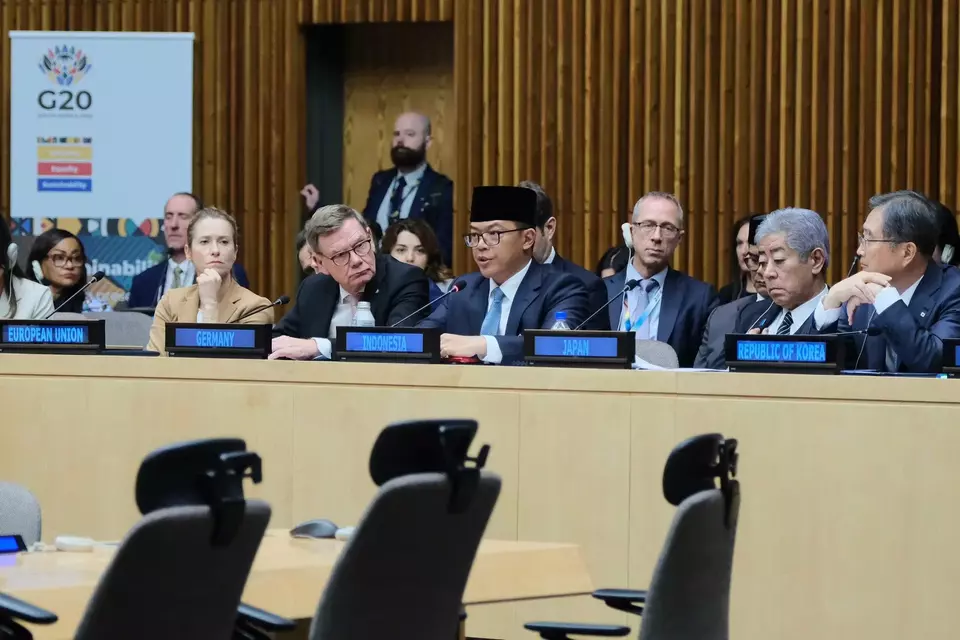
The foreign ministers of the world’s 20 leading economies gathered for a meeting presided over by South Africa on the sidelines of the UN General Assembly's 80th session in New York on Thursday morning local time. The clock is ticking on the Sustainable Development Goals (SDGs) -- a set of targets that countries have pledged to achieve by 2030. The goals include reducing poverty and hunger, while also ensuring that everyone has access to affordable energy and cleaner air as the world works to cut emissions. Amidst a nearing deadline, Indonesian Foreign Minister Sugiono told his G20 counterparts of a $4 trillion financing gap.
"We must recognize the urgency of addressing the financing gap. The SDGs require $4 trillion annually, and the absence of innovation and reform will only widen the gap," Sugiono said.
“We need new and innovative sources of finance. Multilateral development banks must be reformed to serve the needs of developing countries,” he added.
UN’s estimates revealed that the said financing gap was only 1 percent of the global wealth. Indonesia alone requires around $8.7 trillion to meet its 2030 SDG targets, leaving a $1.7 trillion financing gap, according to the UN Joint SDG Fund.
Southeast Asia’s biggest economy has received grants and other forms of funding from its partners and international lenders to expedite its SDGs. Just last year, the Asian Development Bank (ADB) greenlit a $419.6 million loan to help Indonesia expand people’s access to safely managed sanitation services in the cities of Mataram, Pontianak, and Semarang.
Jakarta is also seeking entry to the New Development Bank, which has funded some energy and sanitation projects in other BRICS economies. The Indonesian sovereign fund Danantara has also pitched to investors that it would soon launch patriot bonds in hopes of raising Rp 50 trillion (around $3 billion). The proceeds are expected to go to the country’s waste-to-energy projects and other strategic projects.
Indonesia is currently implementing a budget-heavy free school meal rollout, which the government has said to align with the SDGs’ efforts to tackle hunger and promote quality education for all. The country mainly relies on the state budget -- which is capped at Rp 71 trillion ($4.2 billion) this year -- to make sure kids do not go to class on an empty stomach.
The World is Worried Too
The $4 trillion shortfall has made the world worry. South African President Cyril Ramaphosa told the G20 ministers that 85 percent of the SDGs were currently "off-track". He admitted that the SDGs could be a tall order, especially if the world could not narrow the financing gap.
“We must acknowledge that the pressing issues of low growth, high debt, tightened financial conditions, and constrained fiscal space are truly debilitating our progress. … We need meaningful reforms of the international financial architecture. We must increase grant and concessional financing,” Ramaphosa said.
UN Secretary-General Antonio Guterres revealed the harrowing fact that the global military spending had reached $2.7 trillion last year, almost thirteenfold of all official development aid. The Portuguese diplomat also called for “financial justice,” which he described as backing countries in debt distress and tripling the lending capacity of multilateral development banks.
“... [also] enhancing the participation of developing countries in global institutions and decision-making processes. And we must go further,” Guterres said.
Tags: Keywords: as a preferred
Related Articles

Indonesia Targets Integrated Textile Industry with Rp 100 Trillion Investment
The initiative is part of a broader strategy to consolidate existing manufacturers and strengthen their competitiveness.
Danantara to Form Joint Investment Fund with Egypt
Danantara has yet to issue a statement on this, but a joint statement showed it had been in talks with the Future of Egypt agency.
Danantara to Follow OJK Rules on IDX Ownership
Danantara says that it is still deliberating on the decision, but will follow OJK rules if it decides to acquire IDX stake.
Garuda Indonesia Names Thomas Oentoro as New CEO
Garuda Indonesia appoints Thomas Oentoro as CEO as the airline’s revenue grows and losses narrow, despite renewed negative equity.
Danantara Plans New Committee to Prevent Overinvestment
Danantara has floated plans to establish a committee meant to make sure that SOEs are making the right investment decision.
Danantara Defends Overdue Financial Statement
Danantara says that cross-checking the figures across 1,074 companies takes time.
Some State Companies Set for 2027 IPO: Danantara
The last SOE to go public was Pertamina Geothermal Energy back in 2023.
Danantara Invests $250 Million in US Oil Producer
Danantara announced that it would invest $250 million investment in the Texas-based HighPeak Energy, which operates Permian Basin.
Danantara Yet to Decide on Funding for Used Train Imports from Japan
Danantara has yet to decide whether to fund KAI’s plan to import used Japanese trains as it weighs costs, benefits and domestic capacity.
Indonesia’s US Trade Surplus Defies Tariffs, but Economists Warn Risks Remain
Indonesia posted a $12.47 billion surplus with the US in January-August 2026, up from $12.26 billion a year earlier.The Latest

Prabowo Calls Meeting on Forest Fires as Haze Reaches Jakarta, Singapore
Prabowo summons senior officials to discuss forest fires as smoke reaches Jakarta and Malaysia pushes for regional action.
Jakarta Outranks Amsterdam in Global Public Transport Survey
Jakarta climbs two places to 15th in Time Out's 2026 public transport survey, with its governor citing better network integration.
MSCI Concerns, Tighter IDX Trading Rules Send Indonesian Stocks Down 5% by Midday
Indonesian stocks plunge 5% by midday as MSCI concerns weigh on sentiment and the IDX tightens its daily downside limit to 7%.
Jakarta Prepares 367 Health Facilities as Haze Reaches the Capital
Jakarta prepares 367 health facilities to treat potential haze-related illnesses after smoke from Sumatra and Kalimantan crosses the region.
Jakarta Expands Flood Prevention With New Water Storage Ponds
Jakarta opens two East Jakarta water storage ponds as it expands flood prevention efforts through reservoirs and river normalization.Most Popular
