



Indonesia Says No Plan for Negotiation Yet on Mexico’s 50% Tariff
Jakarta. A senior official said Friday that Indonesia still had no plans for official negotiations with Mexico after the Latin American economy unveiled a 50 percent tariff on Jakarta.
The Mexican Senate recently approved tariff hikes of up to 50 percent starting next year on certain goods, such as autos, textiles, clothing, steel, and plastics from countries with whom Mexico does not have a trade deal. In other words, this will apply to Indonesia, China, India, South Korea, and Thailand, among others. When asked about the the new import tax, Airlangga admitted that Jakarta did not intend to engage in tariff talks with Mexico -- the same way that it was doing with the US -- at least for now.
“No, no [such plans for negotiations] yet,” Airlangga said.
The government data showed Indonesia-Mexico annual trade had soared to $3.1 billion as of October. The trade numbers stood at $2.1 billion in the first ten months of 2024. Throughout last year, Indonesia’s exports totaled $2.2 billion. About $597.5 million of those shipments were autos and parts, making up around 26 percent of the total export. The local arm of the Japanese automaker Toyota already has five factories in Indonesia. These plants are also manufacturing export-bound cars, some of which are now on the roads of Mexico.
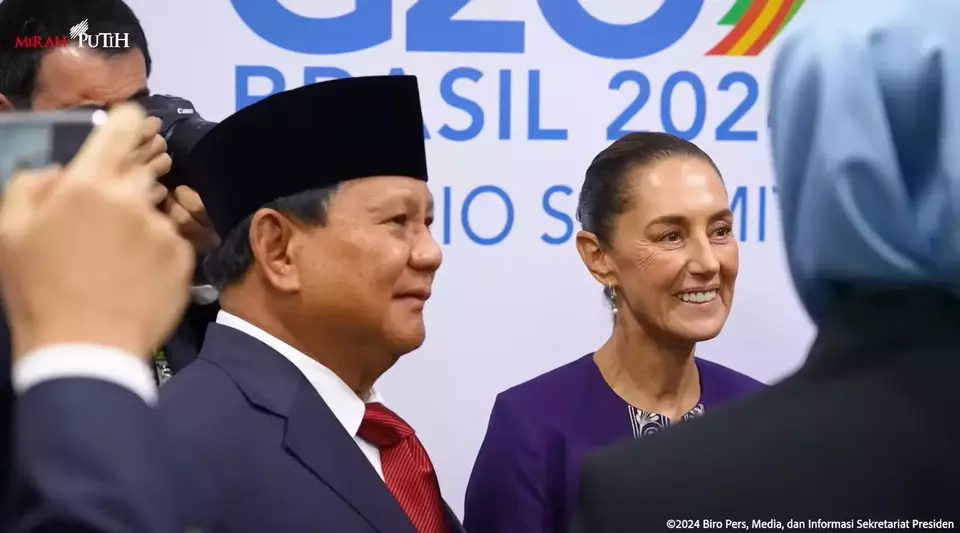
Mexican President Claudia Sheinbaum said that the duty hikes were necessary to boost domestic production.
Indonesia is banking on the CPTPP trade bloc to gain market access to Mexico. The CPTPP -- short for the Comprehensive and Progressive Agreement for Trans-Pacific Partnership -- will give duty-free treatment for 99 percent of the tariff lines among its members once fully implemented. Earlier this month, Airlangga revealed that Indonesia would “begin its accession process to the CPTPP next year”.
The CPTPP brings together Australia, Brunei Darussalam, Canada, Chile, Japan, Malaysia, Mexico, New Zealand, Peru, Singapore, the UK, and Vietnam. They make up 15 percent of the global economy.
Tags: Keywords: as a preferred
The Latest

Students Plan Jakarta Protests to Mark Two Years of Prabowo's Presidency
Police have advised the public to avoid areas around the House of Representatives complex, the National Monument and the State Palace.
UN Boss Commends Indonesian Forest Protection Despite Persistent Haze Problem
Outgoing UN boss António Guterres' comment comes at an ironic time amid Indonesia's struggle with forest fires.
Indonesia Must Benefit Most From Its Minerals: UN Chief
Outgoing UN chief António Guterres says that Indonesia must "retain a far greater share of the economic value" from its minerals.
Chandra Asri Group Receives Trade Finance Excellence Award, Reinforcing Its Role in Indonesia’s Industrial Development
Chandra Asri Group receives the Trade Finance Excellence Award at CIMB Niaga Business Summit 2026.
AEON MALL Deltamas Brings 11 Sports and Creative Competitions to AEONLYMPIC 2026
AEON MALL Deltamas hosts AEONLYMPIC 2026, featuring 11 sports and creative competitions, with more than 3,100 participants.Most Popular
