



How Trading Halts Work and Indonesia’s Worst Market Crashes
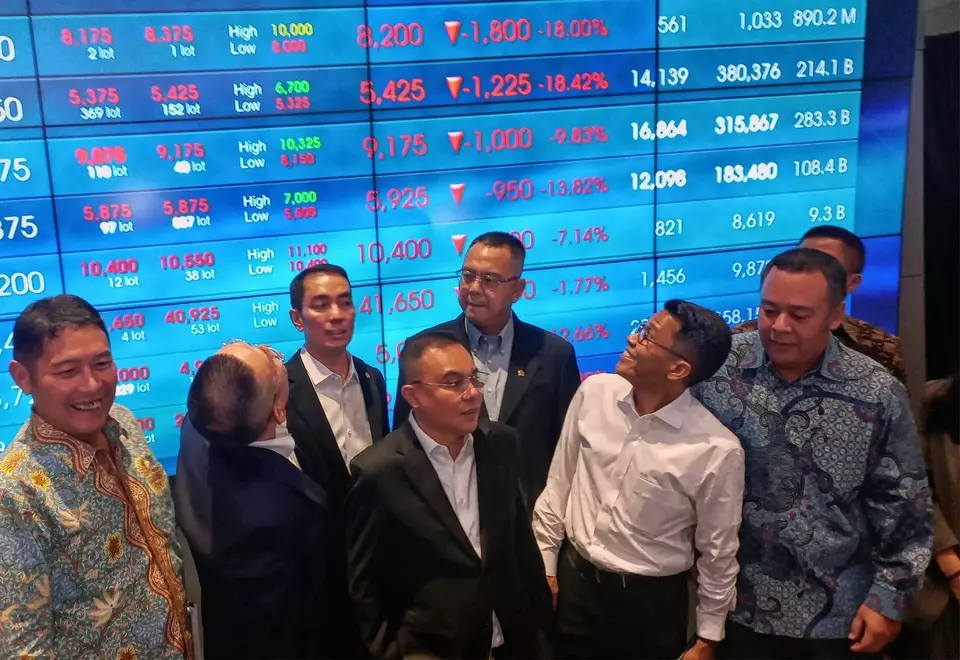
Jakarta. The Indonesia Stock Exchange (IDX) halted trading on Tuesday after the Jakarta Composite Index (JCI) plummeted 5 percent during morning trade, marking its lowest level since September 2021. The index later trimmed losses but still closed 3.84 percent lower at 6,223.39.
“A drop of more than 5 percent signals that Indonesia’s economy is under significant pressure,” said Hendra Wardana, founder of Stocknow.id. “Foreign investors are becoming increasingly cautious, although markets are cyclical, and a rebound is possible if economic policies stabilize.”
How Trading Halts Work
A trading halt is a temporary suspension of stock market transactions to maintain market stability and prevent drastic price declines in a short period.
Under IDX regulations, a trading halt is imposed for 30 minutes if the JCI falls more than 5 percent in a single trading day. If the index drops beyond 10 percent, trading is halted again for another 30 minutes.
In cases where the JCI declines by more than 15 percent, the IDX can implement a trading suspension, which may last until the end of the trading session or longer, subject to approval by the Financial Services Authority (OJK).
During a trading halt, all stock transactions are temporarily suspended, preventing investors from buying or selling assets. The exchange may halt trading for the entire market or specific stocks experiencing extreme volatility.
Historical Market Crashes
The latest market turbulence adds to a series of significant downturns in the JCI’s history. Here are some of the worst declines:
- October 14, 2002: Two days after the Bali bombings that killed 202 people, the JCI plunged 10 percent as investor panic gripped the market.
- August 5, 2003: A terrorist attack on Jakarta’s JW Marriott Hotel triggered a 3.05 percent drop in the index, adding to security concerns.
- October 8, 2008: The index plummeted 10.38 percent amid the global financial crisis, forcing the IDX to halt trading. President Susilo Bambang Yudhoyono held an emergency meeting to address the situation.
- November 11, 2016: The JCI fell 4.01 percent as foreign investors pulled out Rp 2 trillion ($140 million), driven by political uncertainty.
- August 13, 2018: The index dropped 3.55 percent, weighed down by a weakening rupiah and concerns over Indonesia’s widening current account deficit.
- March 9, 2020: As COVID-19 fears gripped global markets, the JCI tumbled 6.58 percent, triggering multiple trading halts. The index ultimately hit its lowest level in over a decade, falling below 4,000 by late March.
 as a preferred
Related Articles

Indonesian Stocks Rally 4.9%, but Foreign Investors Keep Selling
Indonesia’s JCI rose 4.9% last week, but foreign selling and MSCI downgrade risks continue to cloud the market outlook.
Billionaire Agus Projosasmito Adds BRMS Shares Ahead of Gold Miner’s Earnings
BRMS CEO Agus Projosasmito buys 5.5 million shares as the gold miner targets higher output and a return to profit in the third quarter.
OJK Fines 11 Brokerage Firms in Rp 2.1 Trillion Stock Market Crackdown
OJK fines 11 brokerages over violations involving DSSA, BREN and CUAN shares, as total penalties reach Rp 2.1 trillion.
IDX Crash a Wake-Up Call for Indonesia’s Retail Investors
Recompound co-founder Toby Limanto warns Indonesia’s stock rout exposes the risks of social media-driven investing and speculative trading.
Jakarta Stocks Open Higher, Investors Await BI Rate Decision
Indonesian stocks rose 0.62% at the open as investors awaited Bank Indonesia’s rate decision amid inflation and rupiah pressures.
Strong Fundamentals, Fragile Trust
Markets can live with strict rules. What they struggle to accept is uncertainty about the rules that come next.
Prabowo Summons Economic Team Amid Market Volatility
Prabowo meets senior economic officials as the JCI rebounds 4.16% and the rupiah strengthens to Rp 17,992 per dollar.
MSCI Concerns, Tighter IDX Trading Rules Send Indonesian Stocks Down 5% by Midday
Indonesian stocks plunge 5% by midday as MSCI concerns weigh on sentiment and the IDX tightens its daily downside limit to 7%.
Indonesian Bank Stocks Hit Pandemic-Era Valuations After MSCI Shock
Indonesian bank stocks hit crisis-era lows as MSCI's downgrade proposal sparks a selloff and fuels fears of foreign outflows.
Black Week for Indonesia Stocks Exchange as Market Loses $85 Billion
Indonesia’s stocks plunged 14.91% in a week, wiping out $94 billion in market value as MSCI weighs a downgrade to standalone status.The Latest

Ye Concert, Other Events to Draw 130,000 to GBK, Here’s What to Know
Around 130,000 visitors are expected at Jakarta’s GBK on Saturday as Ye’s concert and several major events take place.
Indonesia Allocates Rp 722 Billion for Year-End Flight Ticket Tax Relief
Indonesia allocates Rp 722 billion to cover domestic flight ticket VAT during the 2026/2027 Christmas and New Year holidays.
Greece Floats Shipbuilding Partnership with Indonesia
Greece says that it possesses “extensive expertise” as it woos Indonesia in shipbuilding partnership.
Indonesian Stocks Rally 4.9%, but Foreign Investors Keep Selling
Indonesia’s JCI rose 4.9% last week, but foreign selling and MSCI downgrade risks continue to cloud the market outlook.
Ye Concert in Jakarta to Deploy 2,000 Security Personnel
More than 2,000 personnel will secure Ye’s Jakarta concert on Saturday, as organizers urge fans to use public transport.Most Popular
