



How RCEP Promotes Open Regionalism
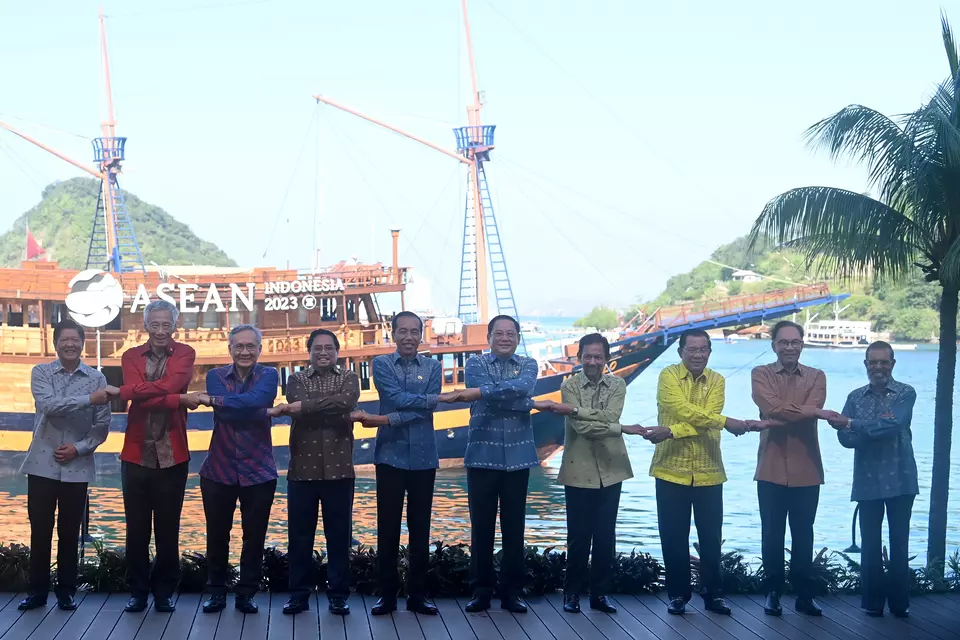
Jakarta. ASEAN could use the Regional Comprehensive Economic Partnership (RCEP) agreement as a means to promote open regionalism with few external trade restrictions as there is no single country in the world that can rely on a closed supply chain system, a former trade negotiator has said.
“ASEAN must take advantage of the RCEP to continue promoting open regionalism because, at the end of the day, no country can establish a closed supply chain system. They need markets and resources like raw materials, manpower, and even technology,” Iman Pambagyo, a former director general for international trade negotiation with the Trade Ministry, said in a recent interview.
ASEAN member countries must keep the regional bloc as the anchor of the RCEP and Indonesia, as the biggest nation in the region, needs to play a major role, added Iman, who once led the Indonesian delegation for RCEP negotiations.
The RCEP comprises ten ASEAN countries namely Brunei Darussalam, Cambodia, Indonesia, Laos, Malaysia, Myanmar, Singapore, Thailand, the Philippines, and Vietnam and their five "dialogue partners" including Australia, China, Japan, New Zealand, and South Korea.
Initiated on Nov. 20, 2012, the RCEP agreement aims to "broaden and deepen economic integration in the region, strengthen economic growth and equitable economic development, and advance economic cooperation."
It also seeks to establish clear and mutually advantageous rules to facilitate trade and investment, including participation in regional and global supply chains for new employment opportunities and better living standards for the peoples in the regon.
The economic partnership is open to other countries as well. India has been granted accession to the RCEP for its active participation in early negotiations but the country decided to leave in 2019.
Iman, who served from 2012-2020, said other economies like Chile, Hong Kong, and Taiwan expressed interest in joining the RCEP when he chaired the negotiation.
"Three months ago I heard that Bangladesh and Sri Lanka also wanted to join. This is what open regionalism means,” Iman said.
As for India, Iman speculated that the country discontinued participation due to China's presence.
"I don’t want to judge them, but from what I read later on, the reason India departed is because there is China,” Iman said.
“But their bilateral economic and business ties are huge in size. Many Indian investors own businesses and factories in China. Only time will tell, but we have set up the mechanism allowing India's immediate return to the RCEP.”
The RCEP agreement eliminates tariffs of 90 percent of traded goods to boost intra-regional trade in the period of 20 years since it took effect. Indonesia began to implement the agreement early this year.
Tags: Keywords: as a preferred
Related Articles

Hong Kong, Chile A Step Closer to RCEP Mega Trade Pact
Bangladesh and Sri Lanka are also making strides in their plans to join the ASEAN-backed mega trade deal RCEP.
European Firms Crave ASEAN-EU Trade Pact to Keep Up with Rivals
European businesses see the absence of an ASEAN pact puts them at a "significant disadvantage" compared to the competitors that have one.
Indonesia, New Zealand Eye $3.5 Billion Trade
Indonesia and New Zealand seek to leverage the halal industry's potential and existing tariff reductions for the $3.5 billion trade by 2029.
ASEAN’s $4 Trillion Economy Held Back by Weak Regional Integration
ASEAN faces growing fragmentation as member states prioritize national interests over regional integration.
Don't Rush to Expand RCEP Trade Deal: Ex-Negotiator
A former Indonesian trade negotiator says it'd be best for RCEP members to focus on ramping up the deal’s utilization rate.
Indonesia’s One-Gate Export Sparks Monopoly Fears Amid a ‘Broken’ ASEAN
Danantara Sumber Daya Indonesia has both monopsonistic and monopolistic power, economist says.
Bruneian MSMEs See Dollar Signs in Indonesian Export
For Brunei, the ASEAN-EU talks on April 27-28 were a chance for the country’s small-scale businesses to gain exposure.The Latest

Chandra Asri Group Receives Trade Finance Excellence Award, Reinforcing Its Role in Indonesia’s Industrial Development
Chandra Asri Group receives the Trade Finance Excellence Award at CIMB Niaga Business Summit 2026.
AEON MALL Deltamas Brings 11 Sports and Creative Competitions to AEONLYMPIC 2026
AEON MALL Deltamas hosts AEONLYMPIC 2026, featuring 11 sports and creative competitions, with more than 3,100 participants.
Indonesian Stocks Extend Losses for Third Day, Fall 3.64% to 4,996
Indonesian stocks fell 3.64% on Monday, extending losses for a third straight session amid MSCI concerns and tighter trading limits.
Prabowo Calls Meeting on Forest Fires as Haze Reaches Jakarta, Singapore
Prabowo summons senior officials to discuss forest fires as smoke reaches Jakarta and Malaysia pushes for regional action.
Jakarta Outranks Amsterdam in Global Public Transport Survey
Jakarta climbs two places to 15th in Time Out's 2026 public transport survey, with its governor citing better network integration.Most Popular
