



Govt Pledges Market Stability, Warns Against Manipulation After IDX, OJK Chiefs Exit
Jakarta. Indonesia’s government has moved to reassure investors that the country’s capital markets will continue to function smoothly after a wave of high-profile resignations at the financial regulator and the stock exchange, following one of the most volatile weeks in the market’s recent history.
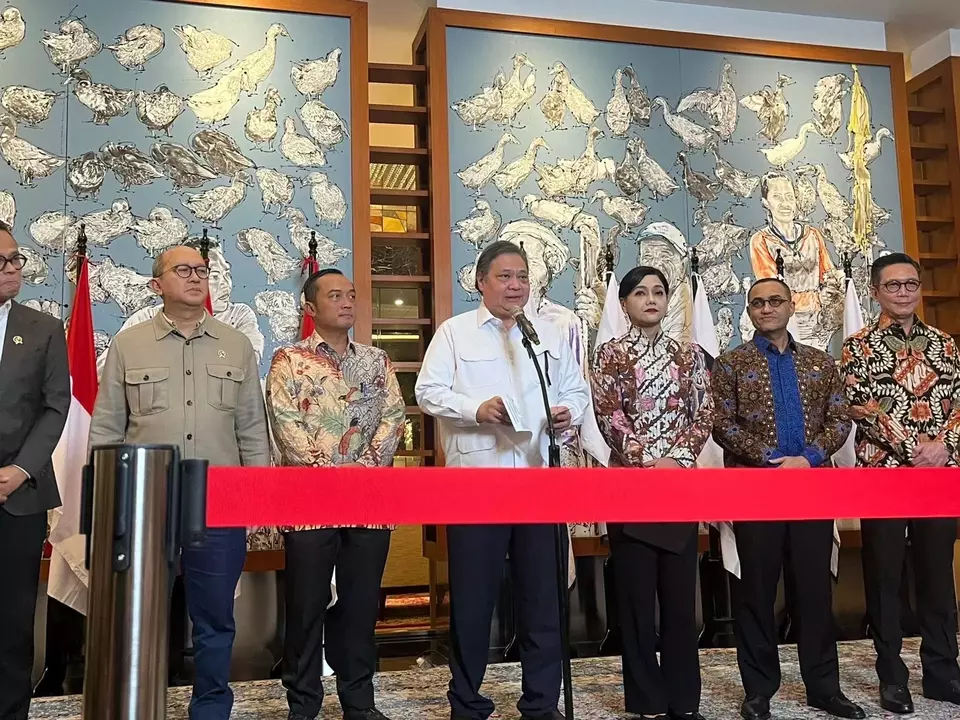
“The President has instructed the Ministry of Finance, together with the leadership of the OJK and the Indonesia Stock Exchange, to ensure that all exchange operations continue to run normally under transitional leadership,” Chief Economic Affairs Minister Airlangga Hartarto said at an impromptu press conference at Wisma Danantara in Jakarta on Saturday.
Airlangga said the interim leadership arrangements would not disrupt the core functions of the capital market or undermine investor confidence. He stressed there would be no leadership vacuum in either financial sector supervision or market operations, with acting officials appointed to ensure continuity in decision-making.
“The interim officials will ensure that all regulatory functions, trading activities, and supervisory duties continue without disruption,” he said.
Airlangga also warned that the government would not tolerate speculative practices that distort the market, particularly stock price manipulation.
“Market manipulation does not only affect share prices and investor interests but also undermines confidence in the national financial system and hampers foreign direct investment,” he said.
Such practices, he added, disproportionately hurt investors — especially retail investors — because share prices no longer reflect companies’ fundamental value but are instead driven by the interests of a small group of market players. Beyond direct losses, he said, manipulation damages the credibility and integrity of Indonesia’s capital market.
“The government will not tolerate manipulative share pricing that harms investors and damages the credibility and integrity of the capital market,” Airlangga said.
The reassurances come after Indonesia’s benchmark Jakarta Composite Index (JCI) endured a sharp sell-off during the Jan. 26–30 period, sliding 6.94% week-on-week to close at 8,329.61, down from 8,951.01 the previous week, according to Indonesia Stock Exchange data. Market capitalization fell 7.37% to Rp 15,046 trillion ($894 billion), from Rp 16,244 trillion a week earlier.
Market volatility peaked midweek. On Wednesday, Jan. 28, the JCI plunged as much as 8% intraday, prompting the exchange to halt trading to stabilize conditions temporarily. A day later, the IDX imposed two additional trading halts after the index again dropped sharply.
The sell-off was triggered by an announcement from MSCI Inc., the global index provider, which introduced interim measures related to its assessment of the free float of Indonesian-listed companies. The move unsettled investor sentiment and sparked heavy selling across the market.
In its assessment, MSCI said that despite minor improvements to the IDX’s free-float data feed, fundamental investability risks remain. These include the potential for coordinated trading behavior that could impair price formation and amplify volatility. MSCI called for more transparent and reliable ownership data, including possible monitoring of excessively concentrated shareholdings, to support a more robust evaluation of free float and investability.
As an interim measure, MSCI said it would freeze several index-related changes for Indonesian securities with immediate effect. The freeze covers upcoming index reviews, including the February 2026 rebalancing, and is intended to reduce index turnover and investability risks while giving market authorities time to deliver what it described as “meaningful transparency improvements.”
MSCI warned that if progress is insufficient by May 2026, it would reassess Indonesia’s market accessibility status. Subject to further consultation, that review could result in a reduction of Indonesia’s weight in MSCI Emerging Markets indexes or, in a more severe scenario, a potential reclassification from Emerging Market to Frontier Market.
The market shock quickly translated into an unprecedented leadership shake-up. On Friday morning, Jan. 30, IDX President Director Iman Rachman announced his resignation, citing responsibility for recent capital market conditions. Later that evening, OJK Chairman Mahendra Siregar also stepped down, along with two senior officials overseeing capital markets supervision: Inarno Djajadi and I.B. Aditya Jayaantara. OJK Vice Chairman Mirza Adityaswara subsequently tendered his resignation.
In response, the OJK appointed interim members of its board of commissioners to ensure leadership continuity and maintain smooth regulation and supervision of the financial sector. The decisions were taken at a board meeting in Jakarta on Friday.
Under the appointments, Friderica Widyasari Dewi, previously chief executive overseeing market conduct, consumer education and protection, was named interim commissioner, assuming responsibilities vacated by both the chairman and vice chairman. Hasan Fawzi, who heads supervision of financial technology innovation, digital financial assets and crypto assets, was appointed interim commissioner, replacing the chief executive in charge of capital markets, derivatives finance and the carbon exchange.
Airlangga said the government remains confident in the resilience of Indonesia’s financial institutions, adding that the market’s underlying foundations remain strong despite global headwinds.
Tags: Keywords: as a preferred
Related Articles

Rupiah Strengthens to Rp 17,992 as Investment Data Lifts Sentiment
Rupiah gains 0.30% to Rp 17,992 per dollar as strong investment realization and easing US-Russia tensions lift market sentiment.
Prabowo Summons Economic Team Amid Market Volatility
Prabowo meets senior economic officials as the JCI rebounds 4.16% and the rupiah strengthens to Rp 17,992 per dollar.
Indonesian Stocks Recover 1.7% After Three-Day Sell-Off Below 4,900
Indonesian stocks rebound 1.7% above 5,000 after a three-day rout as investors assess IDX reforms and MSCI downgrade risks.
'We've Done Everything We Can': OJK Chief as Indonesian Stocks Fall Below 5,000
The OJK launched a broad market reform program in March aimed at bringing Indonesia's capital markets closer to international standards.
Indonesian Stocks Extend Losses for Third Day, Fall 3.64% to 4,996
Indonesian stocks fell 3.64% on Monday, extending losses for a third straight session amid MSCI concerns and tighter trading limits.
MSCI Concerns, Tighter IDX Trading Rules Send Indonesian Stocks Down 5% by Midday
Indonesian stocks plunge 5% by midday as MSCI concerns weigh on sentiment and the IDX tightens its daily downside limit to 7%.
Jusuf Hamka’s $227 Million Buy Not Instant Cure to Indonesia’s Market Crash
Seasoned businessman Jusuf Hamka has floated plans to buy up to Rp 5 trillion (around $277 million) in shares amid market crash.
IDX Caps Daily Stock Losses at 7% as MSCI Fallout Fuels Sell-Off
IDX cuts the daily stock loss limit to 7% to curb MSCI-driven selling, but analysts warn market pressure could persist.
Indonesian Bank Stocks Hit Pandemic-Era Valuations After MSCI Shock
Indonesian bank stocks hit crisis-era lows as MSCI's downgrade proposal sparks a selloff and fuels fears of foreign outflows.
Indonesian Stocks Sink Toward 4,900 as MSCI Threat, $110 Oil Bite
Indonesian stocks plunged 4.31% to a 2026 low near 4,900 as MSCI downgrade fears and oil prices topping $110 per barrel.The Latest

Prabowo Government Gets Poor Ratings from 66% of Surveyed Professionals
According to the findings, 66% of respondents rated the government's overall performance as poor or very poor.
Rupiah Strengthens to Rp 17,992 as Investment Data Lifts Sentiment
Rupiah gains 0.30% to Rp 17,992 per dollar as strong investment realization and easing US-Russia tensions lift market sentiment.
UK to Deploy Typhoon Fighter Jets to Help Protect Saudi from Houthi Attacks
Saudi forces on Tuesday said they had intercepted a Houthi ballistic missile aimed at the kingdom's capital.
Standard Chartered Expands Financing for PT EMI, ALVA Electric Motorcycle Maker
Standard Chartered raises ALVA's financing facility to $20m to support operations, manufacturing and electric motorcycle supply chain.
Jakarta Stocks Gain 5.65% Amid MSCI-Related Reform Efforts
Jakarta stocks climbed 5.65% to 5,278 as regulators pursued market reforms following MSCI's downgrade warning.Most Popular
