



Declining Middle Class Contributes to Indonesia's Deflation, Experts Say
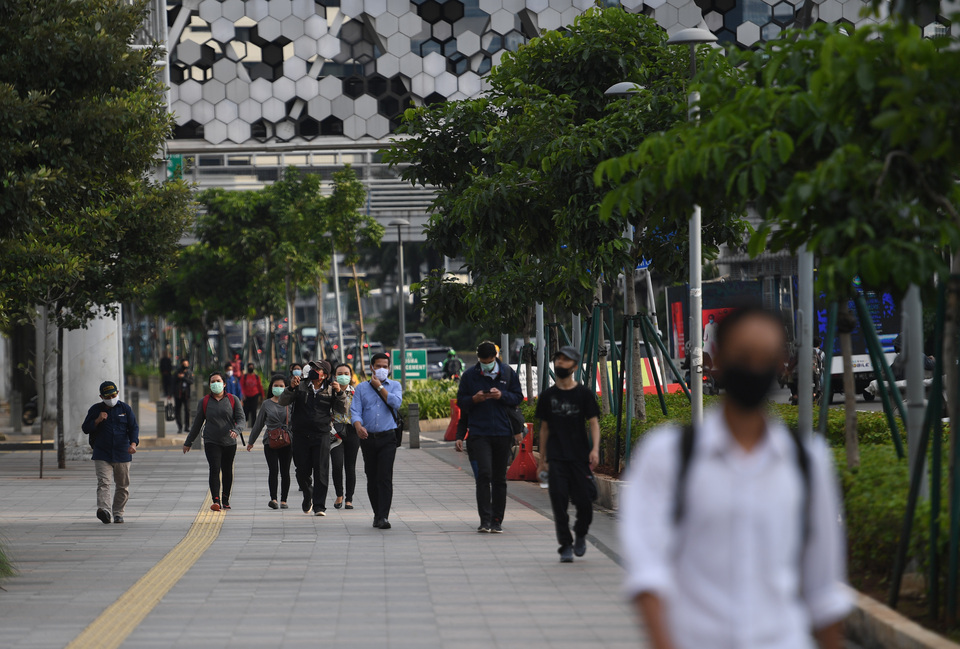
Jakarta. NH Korindo Sekuritas warns that the ongoing deflation trend poses urgent concerns for the Indonesian economy, suggesting that the working class has limited disposable income for spending.
Indonesia reported a year-on-year inflation rate of 1.84 percent for September, a decrease from 2.12 percent in August. September's 0.12 percent deflation marks the fifth consecutive month of deflation since May 2024.
“Economists believe this could hinder Indonesia’s gross domestic product (GDP) from maintaining a growth rate of 5 percent if reliant solely on consumer spending,” NH Korindo Sekuritas stated in a report on Monday.
In response to these economic challenges, President-elect Prabowo Subianto and Vice President-elect Gibran Rakabuming Raka are urged to take immediate action upon taking office. Suggested measures include providing incentives and organizing market operations to promote micro, small, and medium-sized enterprises (MSMEs).
NH Korindo also recommends reevaluating policies related to downstream investment in capital-intensive sectors, which are perceived to have a limited impact on job creation.
The sustained deflation and a contracting Purchasing Managers' Index (PMI) can be attributed to a declining middle class in 2024, followed by an increase in impoverished individuals. The middle class plays a critical role in stimulating domestic economic activity.
Sutrisno Iwantono, Chairman of the Public Policy Association of Indonesian Entrepreneurs (Apindo), remarked that this trend indicates an increasing concentration within Indonesia's industrial sector.
“This means that larger entities are growing larger, smaller ones are diminishing, and the middle class is declining,” Sutrisno said during an interview with Investor Market Today on Monday.
He noted that this situation adversely affects government revenue, particularly since the middle class is the largest contributor to tax income. With the diminishing middle class, Indonesia’s already narrow tax ratio faces further constraints.
“Smaller businesses are challenging to tax, and given our low tax ratio, the government must generate sufficient revenue from taxes. However, a shrinking tax base complicates this,” he explained.
To address these disparities, Sutrisno advocated for a reduction in concentration within the manufacturing sector and called for an increase in the number of medium-sized enterprises. He emphasized the need to narrow the economic gap not just among businesses, but also between regions, particularly between Java and the outer islands.
“By doing so, we can revitalize our economy and foster better growth for the middle class, focusing not only on the middle-class population but also on middle-class economic actors,” he concluded.
According to the National Socioeconomic Survey (Susenas), as of March 2024, Indonesia’s middle class comprised 47.85 million people (17.13 percent), with an additional 137.50 million people (49.22 percent) on the verge of entering the middle class, representing a combined 66.35 percent of the population.
Over the past five years, the proportion of formal middle-class workers has slightly decreased, from 61.71 percent in 2019 to 59.36 percent in 2024. Currently, the middle class and those transitioning into it contribute 81.49 percent of national consumption.
 as a preferred
Related Articles

Jakarta Stocks Rise 0.46% as Trade Surplus Offsets Iran War Fears
Jakarta stocks rose 0.46% as a wider trade surplus lifted sentiment, offsetting concerns over US-Iran tensions and oil prices.
BI May Raise Rate to 6% in Q4 Amid Inflation Risks: Economist
Bank Permata economist Faisal Rachman expects BI to raise its benchmark rate to 6% in Q4 as food, energy and rupiah pressures persist.
Indonesia’s Inflation Hits 3.28% as Food, Transport Costs Rise
Indonesia’s annual inflation reached 3.28% in September, driven by rising food and transportation costs.
Indonesian Stocks Fall as Oil Tops $107 on US-Iran Tensions
Indonesian stocks fell 0.43% as Brent crude topped $107 a barrel amid US-Iran tensions, stoking inflation fears and rate concerns.
Jakarta Stocks Slip as Suahasil Replaces Purbaya as Finance Minister, Fed Hike Bets Weigh
Jakarta stocks slipped as a Cabinet reshuffle, oil prices above $100 and rising Fed hike bets kept investors cautious.
JCI Drops 0.73% as Oil Prices, US-Iran War Weigh on Stocks
Indonesia’s JCI fell 0.73% as US-Iran tensions kept oil prices high, stoking inflation and rate concerns.
Jakarta Stocks Slide as Fed Hike Odds Jump to 73%
Indonesian stocks fell as stronger Fed hike bets and rising oil prices fueled global risk-off sentiment.
Jakarta Stocks Edge Higher as Oil Nears $100
Jakarta stocks edged higher as oil prices neared $100 a barrel, raising inflation concerns and limiting room for rate cuts.
Indonesian Stocks Slip as Rising US Bond Yields Rattle Markets
Indonesian stocks edged lower as a global bond sell-off lifted yields, pressuring risk assets amid renewed inflation concerns.
Indonesian Stocks Extend Gains, JCI Tops 6,600
JCI rose 0.39% to 6,625 at Wednesday's open as investors weighed mixed domestic data and renewed global market volatility.The Latest

Prabowo Calls Meeting on Forest Fires as Haze Reaches Jakarta, Singapore
Prabowo summons senior officials to discuss forest fires as smoke reaches Jakarta and Malaysia pushes for regional action.
Jakarta Outranks Amsterdam in Global Public Transport Survey
Jakarta climbs two places to 15th in Time Out's 2026 public transport survey, with its governor citing better network integration.
MSCI Concerns, Tighter IDX Trading Rules Send Indonesian Stocks Down 5% by Midday
Indonesian stocks plunge 5% by midday as MSCI concerns weigh on sentiment and the IDX tightens its daily downside limit to 7%.
Jakarta Prepares 367 Health Facilities as Haze Reaches the Capital
Jakarta prepares 367 health facilities to treat potential haze-related illnesses after smoke from Sumatra and Kalimantan crosses the region.
Jakarta Expands Flood Prevention With New Water Storage Ponds
Jakarta opens two East Jakarta water storage ponds as it expands flood prevention efforts through reservoirs and river normalization.Most Popular
