



China’s Mixue Overtakes Starbucks and McDonald’s in Southeast Asia
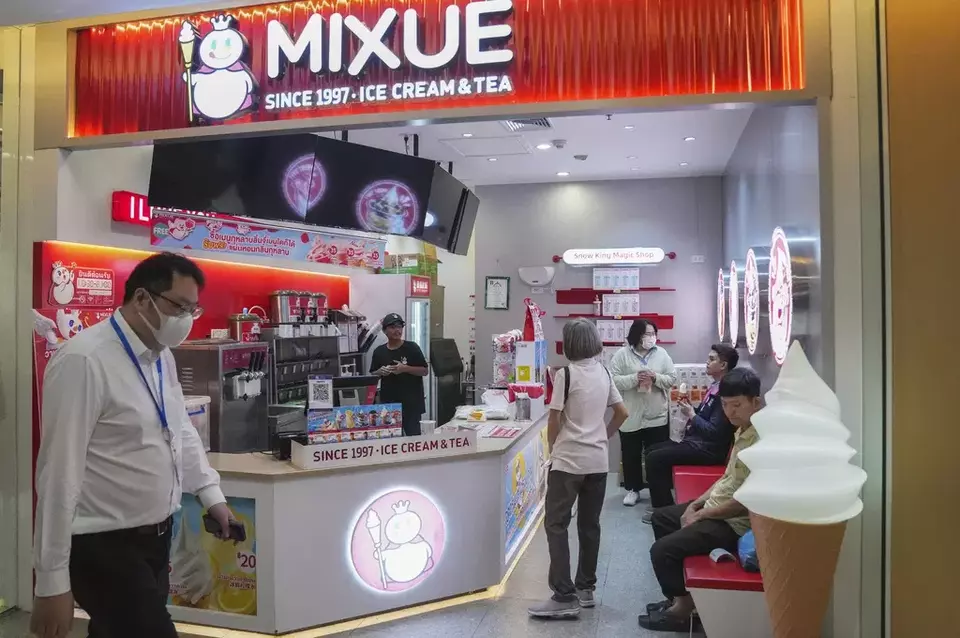
Hong Kong. Chinese food and beverage brands are gaining ground across Southeast Asia, offering alternatives to major American chains and expanding Beijing's commercial and cultural influence in neighboring economies.
Chinese beverage giant Mixue Group has become the world's largest food and beverage chain by number of outlets, surpassing Starbucks and McDonald's.
The company, whose brand name Mixue Bingcheng means "Honey Snow Ice City" in Chinese, is capitalizing on the region’s love for sweets with affordable offerings of ice cream, coffee, and bubble tea.
“Even on social media like TikTok, there’s a joke that any empty shophouse will soon turn into a Mixue store,” said Rahma Yuliana, referring to a popular saying in Indonesia, where Mixue has more than 2,600 outlets.
The single mother, who runs an online business, takes her daughter for after-school treats that won’t drain her wallet, such as a cup of brown sugar milk tea for $1.10—about one-third cheaper than similar offerings from Taiwanese tea chain Chatime. An ice cream costs as little as 50 cents, undercutting McDonald's.
As of September, Mixue Group had over 45,000 stores selling Mixue tea drinks, ice creams, and Lucky Cup coffee products, outnumbering Starbucks and McDonald's, according to industry analysts. About 40,000 of those stores are in China.
By December, Chinese F&B brands had opened more than 6,100 outlets in Southeast Asia, according to Singapore-based research firm Momentum Works. India and Vietnam account for roughly two-thirds of that number, while Singapore and Malaysia, which have sizable Chinese-speaking populations, have a relatively higher concentration of Chinese brands.
Nearly all Mixue stores operate as franchises, with the company supplying ingredients for drinks like Creamy Mango Boba, Mango Oats Jasmine Tea, and Coconut Jelly Milk Tea.
Beyond Mixue, other major players include hotpot giant Haidilao, Fish With You sauerkraut fish restaurants, and beverage brands like Luckin Coffee, Heytea, and Chagee.
Since its March 3 trading debut in Hong Kong, Mixue’s stock has doubled from its IPO price.
Momentum Works CEO Jianggan Li said Chinese businesses are looking to Southeast Asia for new growth opportunities after facing fierce competition at home.
The expansion of food and beverage retailers has also shifted perceptions of Chinese goods from being cheap to offering real value. The companies excel in automation to enhance efficiency and are skilled in online marketing, Li said. Western brands often take longer to find local partners and develop long-term strategies, while Chinese F&B companies are "much more impatient," he noted.
In Thailand’s capital, Bangkok, Chinese entrepreneur Siya Han has invested more than $1.37 million in 12 Mixue stores and about 10 other outlets selling spicy broth bowls, sauerkraut fish, and fried chicken steaks over six years. While shopping mall outlets take time to recoup costs due to hefty rent deposits, her other locations typically break even within six months to a year, excluding lease guarantees.
“If you open Chinese restaurants slowly, you can’t survive,” she said.
In Kuala Lumpur, Chinese sauerkraut fish chain Fish With You sees opportunity in Southeast Asia’s large ethnic Chinese population and growing economies, said Liu Liujun, the company’s vice president.
The brand’s $235,000 investment in one of its Malaysian outlets paid off in just nine months, with lines out the door almost daily, said Liu, who oversees the company’s regional expansion.
For Malaysian customer Victoria Kovalan, the influx of Chinese brands has made it easier to explore new cuisines. “It’s opened up our palates,” she said, noting the popularity of Sichuan hotpots known for their spicy flavors.
Vietnamese student Nguyen Thu Hoài in Hanoi was initially skeptical of Mixue as a Chinese brand but became a regular customer, impressed by its affordability and quality.
Gordon Mathews, an anthropology professor at the Chinese University of Hong Kong, sees the expansion of Chinese F&B brands as part of a broader trend where Chinese products are gaining global appeal. He recalled McDonald's cultural influence when it expanded worldwide, including its first outlet in Guangzhou in the 1990s, where a clerk once told him, "I want to go to America."
“If Chinese food brands expand globally, they might have a similar influence, though the impact remains to be seen,” he said. “China faces an uphill battle in gaining soft power, but it’s doing an excellent job with its products.”
Tags: Keywords: as a preferred
The Latest

Chandra Asri Group Receives Trade Finance Excellence Award, Reinforcing Its Role in Indonesia’s Industrial Development
Chandra Asri Group receives the Trade Finance Excellence Award at CIMB Niaga Business Summit 2026.
AEON MALL Deltamas Brings 11 Sports and Creative Competitions to AEONLYMPIC 2026
AEON MALL Deltamas hosts AEONLYMPIC 2026, featuring 11 sports and creative competitions, with more than 3,100 participants.
Indonesian Stocks Extend Losses for Third Day, Fall 3.64% to 4,996
Indonesian stocks fell 3.64% on Monday, extending losses for a third straight session amid MSCI concerns and tighter trading limits.
Prabowo Calls Meeting on Forest Fires as Haze Reaches Jakarta, Singapore
Prabowo summons senior officials to discuss forest fires as smoke reaches Jakarta and Malaysia pushes for regional action.
Jakarta Outranks Amsterdam in Global Public Transport Survey
Jakarta climbs two places to 15th in Time Out's 2026 public transport survey, with its governor citing better network integration.Most Popular
