



China's Economy Grows 5.4% in First Quarter on Strong Export Surge
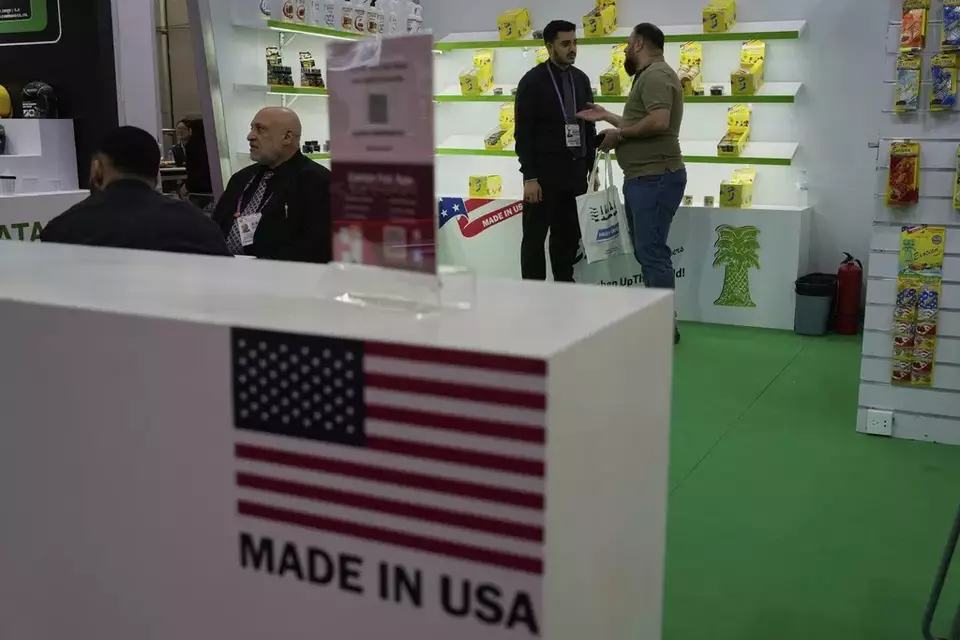
Bangkok. China’s economy grew at a 5.4 percent annual pace in the January–March quarter, supported by strong exports ahead of steep tariff hikes imposed by U.S. President Donald Trump, the government said Wednesday.
Analysts warn that the world’s second-largest economy may slow significantly in the coming months as tariffs of up to 145 percent on Chinese goods take effect.
Exports were a key driver in achieving the 5 percent growth target set by the government for 2024. Beijing has maintained its target for the year at around 5 percent, despite mounting global headwinds.
In response to US tariffs, China has imposed retaliatory tariffs of up to 125 percent on American exports. At the same time, it continues to promote openness to trade and foreign investment.
On a quarterly basis, China’s economy expanded by 1.2 percent in the first three months of the year.
Exports surged more than 12 percent in March and nearly 6 percent for the full quarter, as companies rushed to ship goods before the US tariffs took hold. The export boom has helped sustain robust manufacturing activity in recent months.
However, despite relatively strong growth by global standards, China continues to struggle with a broader economic recovery following the COVID-19 pandemic. A lingering property sector downturn --triggered by a government crackdown on excessive developer borrowing-- has weighed heavily on consumer and investor confidence.
The escalating tariff conflict presents yet another challenge for policymakers attempting to stimulate investment, boost hiring, and encourage domestic consumption.
Economists remain cautious about the outlook, particularly amid uncertainty surrounding Trump’s shifting trade policies.
“Given the events over the past two weeks, it is extremely difficult to predict how the US and China tariffs on each other might evolve,” UBS economists led by Tao Wang said in a report.
Despite the tensions, the International Monetary Fund and the Asian Development Bank have maintained more optimistic forecasts, projecting around 4.6 percent growth for China in 2024.
Since returning to office, Trump initially ordered a 10 percent tariff increase on Chinese imports, later raising it to 20 percent. Most Chinese exports to the US now face tariffs of up to 145 percent.
UBS estimates that if the tariffs remain at current levels, China’s exports to the US could fall by two-thirds in the coming months. The bank also forecasts a 10 percent drop in China’s global exports by dollar value. As a result, UBS has revised its full-year growth forecast down to 3.4 percent from 4 percent, and expects growth to slow further to 3 percent by 2026.
In response, Beijing has ramped up efforts to stimulate domestic demand. Over the past seven months, it has expanded subsidies for auto and appliance trade-ins and directed more funding toward housing and other cash-strapped sectors.
Tags: Keywords: as a preferred
Related Articles

BRICS Indirectly Hits Out at Trump’s Tariffs, WTO Paralysis
BRICS doesn't want to see unilateral tariffs and a paralyzed WTO court system, all of which are linked to the US.
Indonesia Denies US Accusation of Chinese Transshipment Scam
Senior minister Airlangga Hartarto says "Indonesia has never done transshipment", when asked about the US report.
US Accuses Indonesia of Helping China Dodge Trump Tariffs
The US accuses Indonesia and dozens of other countries of being part of "China's shadow transshipment network".
Chinese Ship Sets Off for Europe Through Arctic, Halving Travel Time
The "Dubai Tower" will pass through the Bering Strait, then turn west through the frigid waters along Russia's northern coast.
East Asia’s Next Growth Model: How to Grow Better, Not Just Faster
While East Asia still outpaces the global average, slower growth is exposing persistent vulnerabilities.
China's Exports and Imports Surge in July
China's shipments to the United States rose 17% year-on-year last month as the countries remain locked in a trade war.
ASEAN Hopes for Predictability on Trump’s Tariffs
ASEAN says the region's businesspeople wish for a predictability and certainty as Trump launches a fresh round of tariff hikes.
Indonesia Banks On EU as Trump's 10% Tariff Kicks In
Indonesia wants to fast-track its European Union (EU) trade deal as Jakarta tries to find alternatives to the tariff-agressive US.
US Slaps 10% Tariff on Indonesia over Forced Labor
A new 10% tariff on Indonesia following a forced labor probe will take effect on Friday before noon.
China's Economy Slows 4.3% Annual Growth, Weakest Since Late 2022
Exports of high-tech products such as electric vehicles, computer chips and other electronic equipment have risen sharply.The Latest

Chandra Asri Group Receives Trade Finance Excellence Award, Reinforcing Its Role in Indonesia’s Industrial Development
Chandra Asri Group receives the Trade Finance Excellence Award at CIMB Niaga Business Summit 2026.
AEON MALL Deltamas Brings 11 Sports and Creative Competitions to AEONLYMPIC 2026
AEON MALL Deltamas hosts AEONLYMPIC 2026, featuring 11 sports and creative competitions, with more than 3,100 participants.
Indonesian Stocks Extend Losses for Third Day, Fall 3.64% to 4,996
Indonesian stocks fell 3.64% on Monday, extending losses for a third straight session amid MSCI concerns and tighter trading limits.
Prabowo Calls Meeting on Forest Fires as Haze Reaches Jakarta, Singapore
Prabowo summons senior officials to discuss forest fires as smoke reaches Jakarta and Malaysia pushes for regional action.
Jakarta Outranks Amsterdam in Global Public Transport Survey
Jakarta climbs two places to 15th in Time Out's 2026 public transport survey, with its governor citing better network integration.Most Popular
