



All Food Products in Indonesia Now Subject to Halal Certification, Imported Foods by 2026
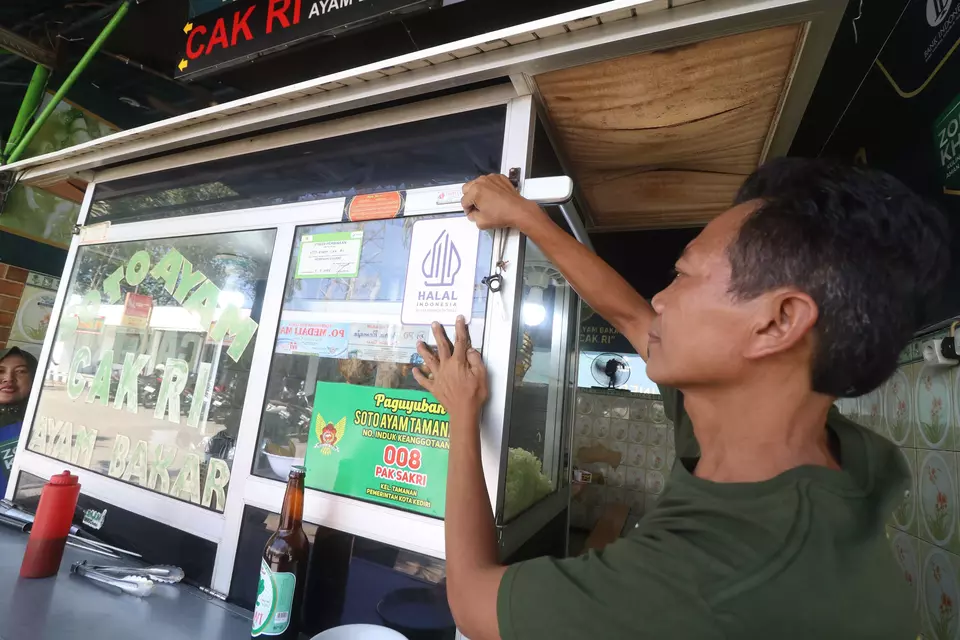
Jakarta. The Halal Product Assurance Agency (BPJPH) under the Ministry of Religious Affairs officially enforced mandatory halal certification starting Friday, Oct. 18. Government Regulation No. 42 of 2024 on the Implementation of Halal Product Assurance applies to all food products within Indonesia, and imported foods will become mandatory by 2026.
BPJPH Head Muhammad Aqil Irham said the government had provided a five-year adaptation period for businesses to prepare for the halal certification process, from Oct. 17, 2019, to Oct. 17, 2024.
Aqil explained that the mandate initially applies to three categories of products produced by medium and large businesses: food and beverages, food raw materials and additives, and slaughtered products and services.
He stressed that businesses in these categories must be halal-certified by Oct. 18. If their products are not certified and remain on the market, sanctions will be imposed, including written warnings or product withdrawals. However, this requirement does not apply to non-halal products, such as those containing pork or liquor.
For small businesses producing the same categories of products, Aqil noted that they have until Oct. 17, 2026, to obtain halal certification.BPJPH urged small businesses to apply for halal certification as soon as possible.
For imported products, the halal certification requirement will be determined by the Religious Affairs Minister no later than Oct. 17, 2026. The ministry is currently in discussions with other countries regarding the requirement.
To support the implementation of this mandate, BPJPH has begun nationwide Halal Product Assurance (JPH) supervision as of Oct.18, ensuring that medium and large businesses have obtained the required halal certification.
"Alongside this supervision, we continue to educate businesses to adapt to the growing consumer awareness of halal products. Halal certification should not be seen merely as an administrative burden but as an added value to improve product quality, competitiveness, and market reach," Aqil explained.
"Today, halal products are driven by both domestic and global consumer trends. We should ensure our people are not consuming halal products from abroad," he concluded.
Tags: Keywords: as a preferred
Related Articles

Businesses Back Mandatory Halal Rules, Warn of Rising Compliance Costs
Businesses support Indonesia’s mandatory halal rules but urge simpler certification and lower compliance costs to protect MSMEs and consumer
80 Countries Ready for Indonesia’s Mandatory Halal Certification: BPJPH
BPJPH says more than 80 countries are ready for Indonesia’s mandatory halal certification as it expands overseas verification.
Indonesia, Sweden Ink Halal Certificate Agreement
Indonesia will officially make halal labeling mandatory for food and cosmetics starting on October 18.
Philippines Eyes ASEAN Halal Standards
The Philippines is eyeing a halal recognition deal with Indonesia as it seeks regional standards for Sharia-compliant goods.The Latest

Students Plan Jakarta Protests to Mark Two Years of Prabowo's Presidency
Police have advised the public to avoid areas around the House of Representatives complex, the National Monument and the State Palace.
UN Boss Commends Indonesian Forest Protection Despite Persistent Haze Problem
Outgoing UN boss António Guterres' comment comes at an ironic time amid Indonesia's struggle with forest fires.
Indonesia Must Benefit Most From Its Minerals: UN Chief
Outgoing UN chief António Guterres says that Indonesia must "retain a far greater share of the economic value" from its minerals.
Chandra Asri Group Receives Trade Finance Excellence Award, Reinforcing Its Role in Indonesia’s Industrial Development
Chandra Asri Group receives the Trade Finance Excellence Award at CIMB Niaga Business Summit 2026.
AEON MALL Deltamas Brings 11 Sports and Creative Competitions to AEONLYMPIC 2026
AEON MALL Deltamas hosts AEONLYMPIC 2026, featuring 11 sports and creative competitions, with more than 3,100 participants.Most Popular
